

Research
The focus is on phases of political, social and cultural transformations as well as on the various
spiritual and religious movements that characterize the eventful course of Jewish history. Jewish history is always understood in the context of the goal of general history and as an integral part of it.
Current project: Jewish World Heritage - local Jewish heritage in Germany
in 2021, the SchUM sites in Speyer, Worms and Mainz were inscribed on theUNESCO World Heritage List, followed two years later by the medieval Jewish heritage of Frankfurt. In addition to these now internationally recognized sites, there are numerous other buildings, archaeological remains and sites that commemorate different phases of Jewish presence on the territory of present-day Germany. The project focuses comparatively on the Jewish World Heritage Sites and a selection of other Jewish cultural heritage sites in Germany (including the MiQua/Archaeological Zone in Cologne, the former country synagogue in Neidenstein/Baden and a former Jewish school in Leer/Lower Saxony). The participating disciplines, Jewish Studies (headed by Prof. Johannes Heil) and Social and Cultural Heritage Studies (headed by Prof. Thomas Schmitt) work closely together.
Jewish cultures in the Mediterranean region in late antiquity and the early Middle Ages
The extensive cultural changes on the threshold between Late Antiquity and the Early Middle Ages with regard to the emerging Jewish cultures of the Middle Ages (Ashkenaz, Sepharad) will be examined, particularly on the basis of epigraphic evidence.
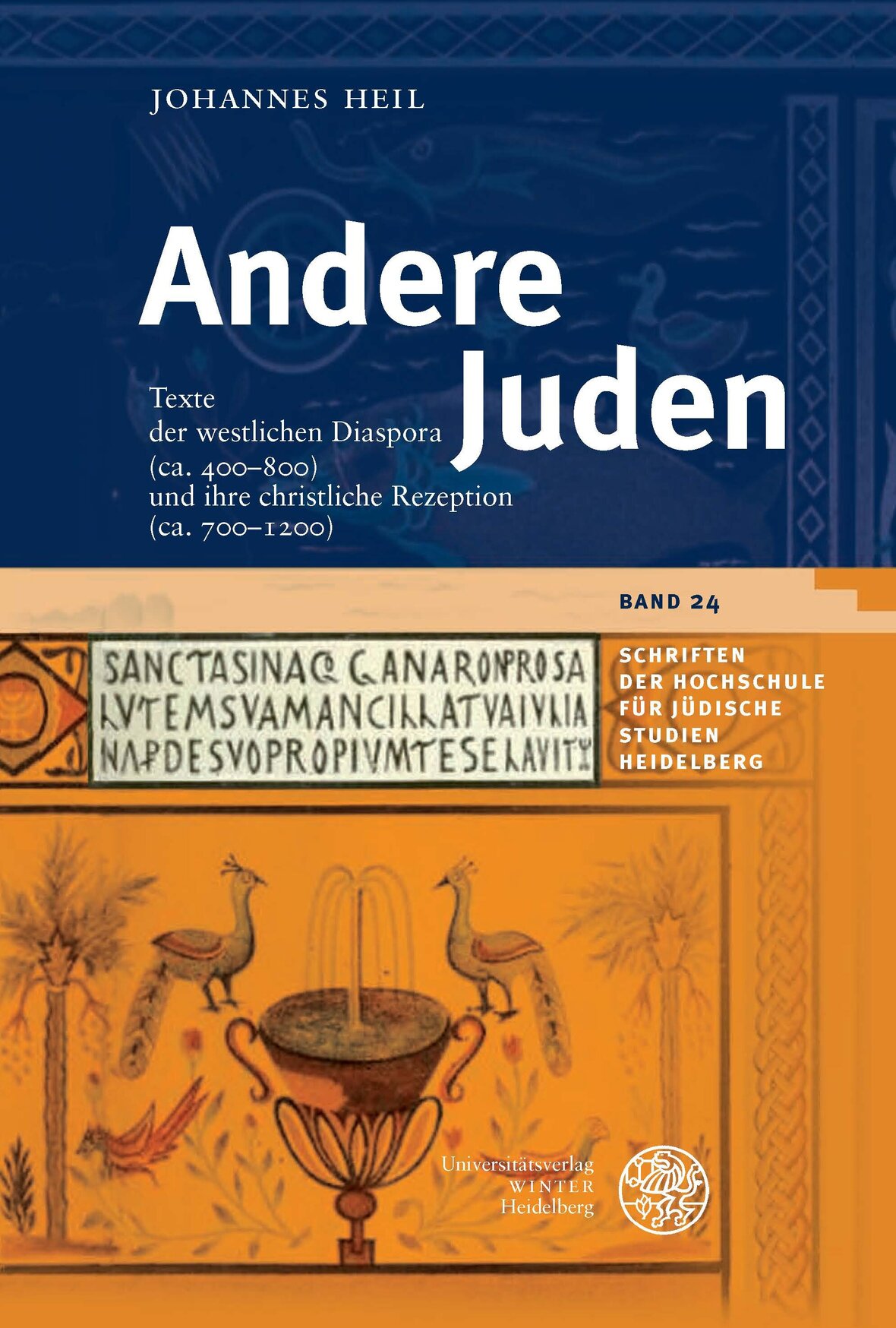
The study profiles the western Mediterranean region as a Jewish diaspora landscape of its own character. Until the reception of rabbinic Judaism in the High Middle Ages, the West was not a blank space. Archaeological and epigraphic evidence in Greek and Latin, and only to a lesser extent in Hebrew, provides impressive proof of this.
This can now be juxtaposed with pieces of a corpus of Latin texts of very different genres which, as a result of the later Hebraization of the written culture of the western Jews, have only been preserved from ecclesiastical tradition. They do not contain any Christian content and were known to authors of the 9th century as Jewish texts. The book thus places the older cultural history of the diaspora on a new footing and offers insights into questions of self-understanding, self-assertion and cultural diversity as well as transformations in plural societies.
Emergence and development of Jewish diaspora cultures on the American continent
Today, the largest Jewish diaspora exists in North America. European roots can also be found in the communities of South America. Both are characterized by the fact that they have taken independent paths and developed their own profiles - this is not only interesting for teaching at home, but is also instructive for understanding the existence of the diaspora today.
Historical research into prejudice and anti-Semitism
There is no eternal anti-Semitism, but rather a constant stream of variable forms of prejudice against Jews as a minority in their time - historical and contemporary forms of anti-Semitism are dealt with from this perspective. Because "yesterday cannot become better" (Jörn Rüsen), but understanding it improves our view of today and tomorrow.