Interpretation of the month Kislev

The voice is the voice of Jacob (Gen 27:22)

The voice that wails like this is the voice of Jacob's children, who are slain by the hands of the wicked.

—Qalonymos ben Yehuda from Mainz

Jacob laughed when I reminded him of the jasmine fields of our youth. Strange, just when he laughs, I hear a furtive whimper in his voice.

—Meir Shalev, Esaw

The Chair of Bible and Jewish Bible Interpretation is the only one of its kind in Germany that deals with the text, tradition, exegetical reception and modern interpretation of the Hebrew Bible from antiquity to modern times in teaching and research. The field of research into biblical history and literature alone covers a historical framework of more than 1000 years. If one adds to this the sources for Jewish biblical interpretation in the Middle Ages and modern times as well as the Masorah as a link between the (Masoretic) biblical text and its interpretation, this subject ideally covers more than 2500 years, which need to be surveyed in literary-specific questions of detail as well as in increasingly interdisciplinary questions and research approaches. With the exception of a few sources on Jewish biblical interpretation in the 19th and 20th centuries, all the key sources are written in Hebrew and Aramaic.

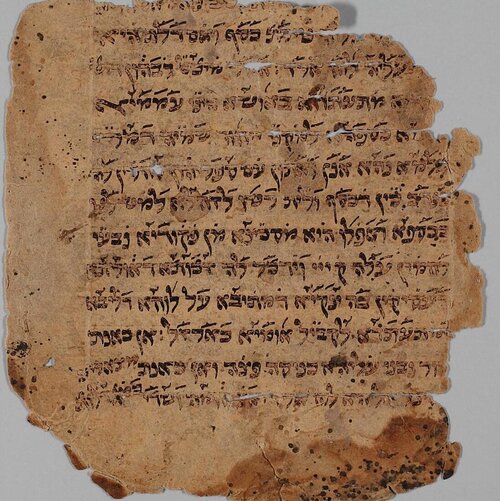
The Heidelberg Chair focuses on the one hand on Masoretic Bible text and manuscript research (9th-13th centuries), and on the other hand on sources for Jewish Bible interpretation from the first half of the 10th to the second half of the 13th century, as well as on the 19th and 20th centuries.

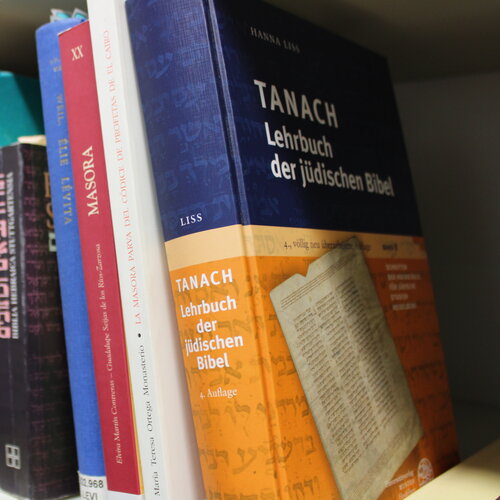
Bücher: Tanach, Liss

Main research areas

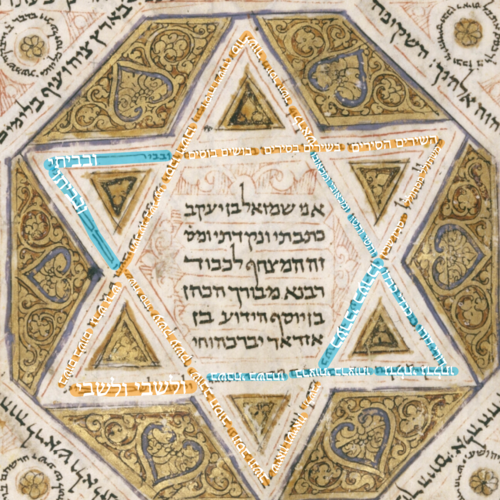
Only the so-called Masora from Eretz Israel, i.e. the Masoretic hypertext with vocalization, accentuation and the addition of various annotations, allows the ancient consonantal text (Qumran) to become a medieval Masoretic text. The aim of the research at the chair is the first study of the Western European (Ashkenazic) Masora tradition between the 11th and 15th centuries, which differs from the Oriental Masora philologically and in its external appearance as a masora figurata. It also deals with the process of inculturation of the masora and the Hebrew Bible text into the Christian environment (architecture; book art).

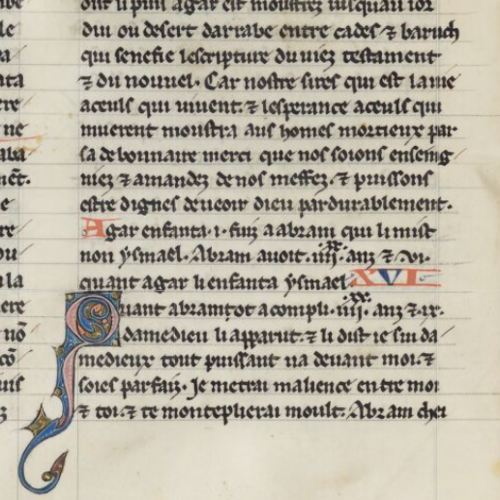
The Heidelberg Chair focuses in particular on the interpretative tradition of the medieval northern French school of exegetes, i.e. the exegetical commentaries of R. Shelomo Yitzchaqi (RaShY) and his school, R. Avraham Ibn Ezra, the members of the Qimchi family and R. Moshe ben Nachman ('RaMBaN = Nachmanides'). In addition, the surviving Hebrew-French Bible glossaries, especially from the 13th century, are also dealt with. These Bible glossaries, which reproduce the vernacular glosses in Hebrew graphics, are exceptional witnesses not only for exegetical and cultural-historical Judaic research, but also for morphological, phonological and lexical research into Old French between the 11th and 13th centuries. They form fundamental texts for research into the interrelations between Jewish intellectual history and the non-Jewish environment.

The biblical interpretation of the representatives of the so-called science of Judaism in Germany and Eastern Europe is being researched primarily with regard to its influence on modern Judaism and its understanding of religion and culture.

Courses

The courses are regularly linked back to the main areas of research.

The entire spectrum of the subject - from the biblical traditions to the latest interpretative literature - is covered and dealt with in teaching on the Bachelor's and Master's degree courses.

In cooperation with the Abraham Berliner Center , workshops and lectures are regularly held with international guest scholars.

Teaching

Winter Semester 2026/2027

  • Introductory Course: Mechina: Introduction to the Hebrew Bible

Lecturer: Visiting Professor Dr. Naphtali Meshel

Monday, 9:15–10:45 a.m., S 1

  • Advanced Seminar / Tutorial: Rituals in Jewish and Indian Texts

Lecturers: Visiting Professor Dr. Naphtali Meshel & Dr. Anand Mishra

Monday, 11:15 a.m.–12:45 p.m., SAI, Room 130.02.25

  • Seminar / Tutorial: Great Jewish Books

Lecturer: Visiting Professor Dr. Naphtali Meshel

Tuesday, 9:15–10:45 a.m., S 1

  • Tutorial: Readings in Biblical Wisdom Literature

Lecturer: Visiting Professor Dr. Naphtali Meshel

Tuesday, 11:15 a.m.–12:45 p.m., S 2


Research projects at a glance

Masorah Rearranged: Eight Masoretic Lists in MS London Oriental 2091, fol. 335vcorpus masoreticum working papers 6 (2023).

Corpus Masoreticum

Paris Arsenal 5956

Bible Glossaries

Berlin_SPK_Fragment_zum_Hohelied_Public_Domain_1.0

Biblia Rabbinica


Events

No news available.

Past Events

Commemorative Events on November 9, 2026

News Special Dates

Commemorative Events on Monday, November 9, 2026

  • 5:30 p.m. | Heidelberg – “Cleaning the Stumbling Stones” event
    • Location: Meet at Montpellierplatz
    • Details: Anti-fascist cleanup campaign for Stolpersteine. Participants are welcome to bring red carnations and candles; followed by a gathering at Café Gegendruck. More information at Stolpersteine Heidelberg.
  • 6:00 p.m. | Heidelberg – Main Commemoration Ceremony at Alter Synagogenplatz
    • Location: Alter Synagogenplatz (Große Mantelgasse at the corner of Lauerstraße)
    • Details: Official commemoration by the City of Heidelberg, the Jewish Community, and the Society for Christian-Jewish Cooperation. Speeches by Mayor Jürgen Odszuck and Jewish representatives; students will read the names of deportees. The square is accessible.
  • 6:00 p.m. | Heidelberg-Rohrbach – Neighborhood Commemoration
    • Location: Old Rohrbach Town Hall (Rathausstraße)
    • Details: Commemoration of the destruction of the Rohrbach synagogue, organized by the neighborhood association and punker e. V. with the participation of Rabb. PRof. Birgit Klein and students from the International Comprehensive School (IGH).
  • 6:00 p.m. | Mannheim – Ecumenical and City-Wide Commemoration
    • Location: St. Sebastian Market Square Church (Marktplatz, F1)
    • Details: Organized by the ACK Mannheim and the Society for Christian-Jewish Cooperation Rhine-Neckar. Featuring remarks by Pastor Lukas Glocker and a speech by Mayor Christian Specht.
  • 7:15 p.m. | Heidelberg – Commemoration at the Haus der Begegnung
    • Location: Haus der Begegnung (Merianstraße 1, across from the Jesuit Church)
    • Details: Ecumenical memorial service featuring readings, music, and a blessing, organized by the ACK and the Society for Christian-Jewish Cooperation. Follows immediately after the ceremony at Synagogue Square.
  • 7:30 p.m. | Heidelberg – Memorial Reading at the Theater
    • Location: Alter Saal, Theater & Orchester Heidelberg (Theaterstraße 11)
    • Details: Literary and musical reading titled “Against All Forms of Anti-Semitism” by the theater ensemble, dedicated to historical Jewish voices and the present day.
  • 7:00 p.m. | Schwetzingen – Central Commemoration Ceremony “… so that you do not forget”
    • Location: Evangelical City Church of Schwetzingen (Mannheimer Straße 32–34)
    • Details: Commemoration organized by the City of Schwetzingen, the ACK, and the DGB. Featuring keynote speaker Kurt Glöckler and City Archivist Joachim Kresin. The event will be followed by a silent march with a wreath-laying ceremony at the memorials on Zeyherstraße.

Reichspogromnacht 2026
  • Date: 5 November 2026
    Date 5 November 2026
  • Time: 
	07:25
	UTC+01:00
    Time 07:25 UTC+01:00
  • Participation:
    Participation
  • Language:
    Language
  • Contact:
    Contact
  • Location:
    Location
  • Registration? No

News


Get to know the ABC and become a member

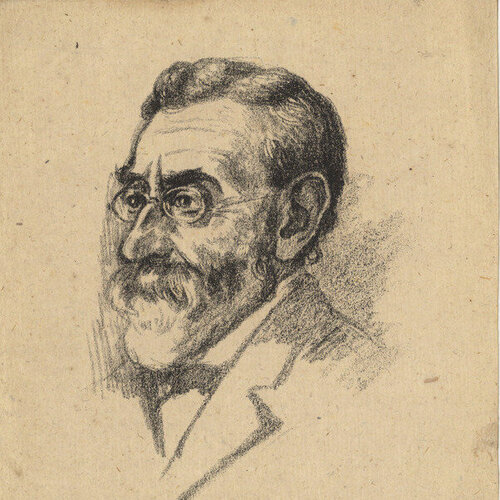
Portrait of Professor Abraham Berliner (1833-1914)

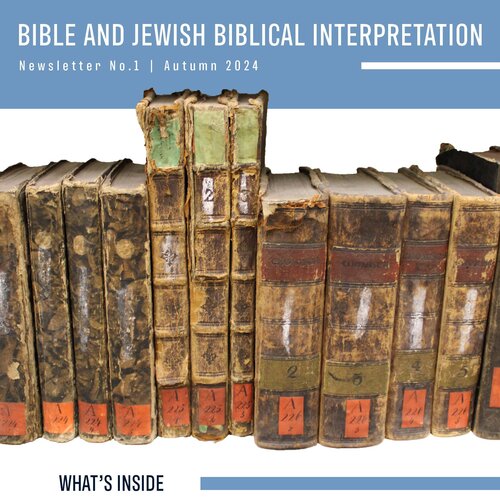
Newsletter cover Lehrstuhl Bibel