


Colloquium "Judaeophobia? Identity Conflicts of Judaism in Antiquity"
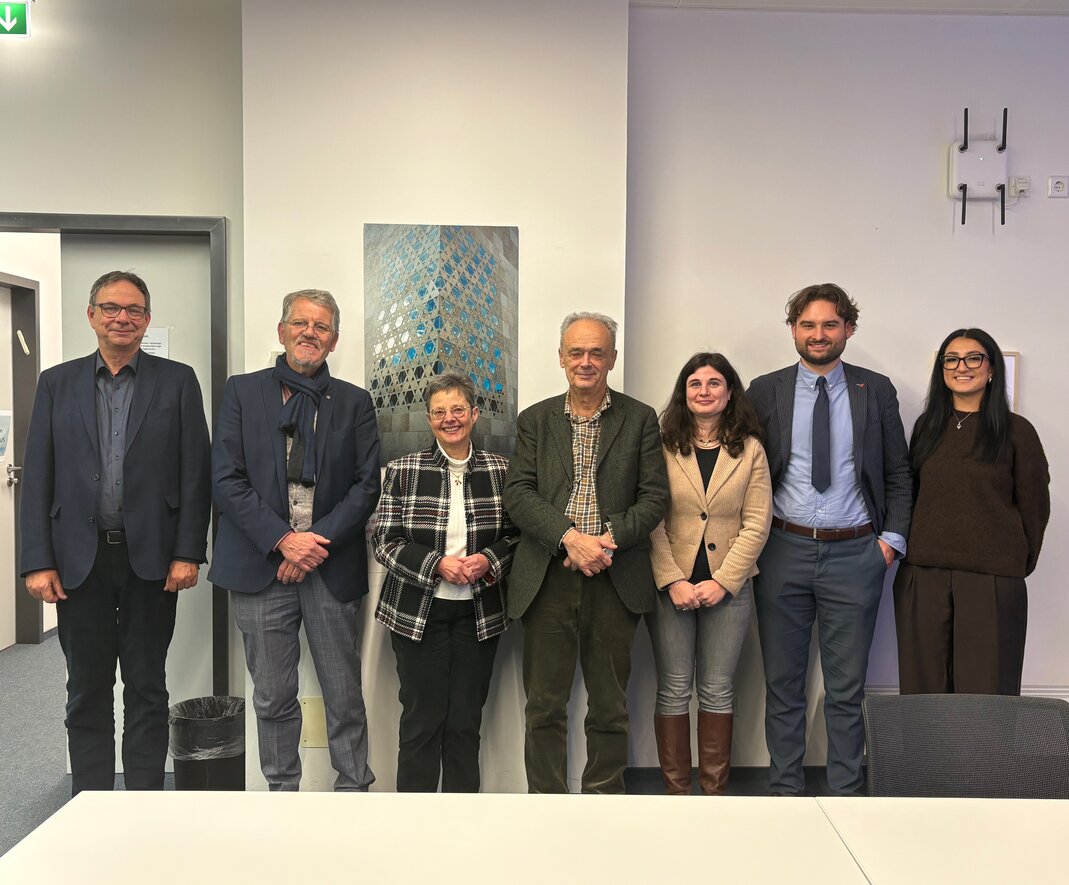
In cooperation with the Università Roma Tre, the event included lectures on the topic of "Judaeophobia". The term itself, Jewish life in the Egyptian hinterland, Jewish identity and nationalism were discussed and analyzed.
In his introduction, Professor Johannes Heil addressed, among other things, the problem that works on Jewish history are often written outside of Jewish faculties. He also led directly into the title of the conference: Judeophobia. Heil criticized the core of the term, as it implies the possibility of viewing Jews as something threatening.
Under the title "Jewish life in the Egyptian hinterland", Professor Andrea Jördens drew a picture of a past society in which Jewish life was very present. Jews were socially integrated, for example in the security service, worked as farmers and even had their own jurisdiction. Looking back to the early imperial period, no change can be observed; it seems that there was still a good level of coexistence, according to Jördens. Particularly significant were shards of pottery inscribed with ink, so-called ostraca.
It was not only the image of Moses on them that was interesting, but also the instruction to provide the Jews with grain rather than bread this time. This was presumably timed to coincide with Passover and therefore represented a guarantee of religious practices on the part of the Romans.
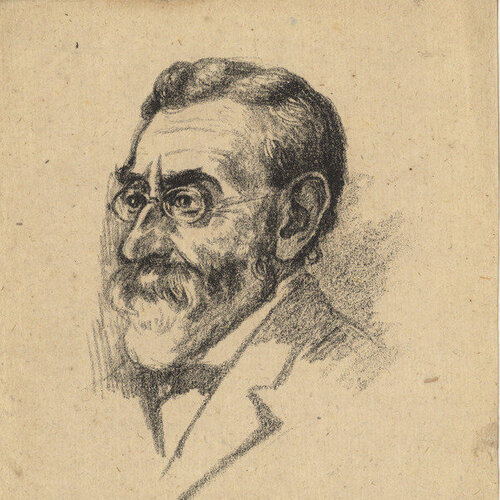
Francesca Lorenzini invited the audience to reflect on the extent to which one should reject, accept or question the use of the terms 'nation and nationalism' in relation to ancient Judaism. She considered the elements that contributed to the emergence of a Jewish national identity in antiquity, attributing an important role to the mass dissemination of biblical literature. Lorenzini noted that Jewish national identity at its inception exhibited a duality consisting of ancestry and cultural heritage. She concluded that, contrary to Mendel's assertions, it was not Jewish nationalism that disappeared after 135-136 AD, but the desire for an independent Jewish state. Nationalist symbols had not disappeared either, but had evolved and adapted to the current needs of a people. Against this background of metamorphosis, the use of the categories "nation" or "nationalism" can be observed.
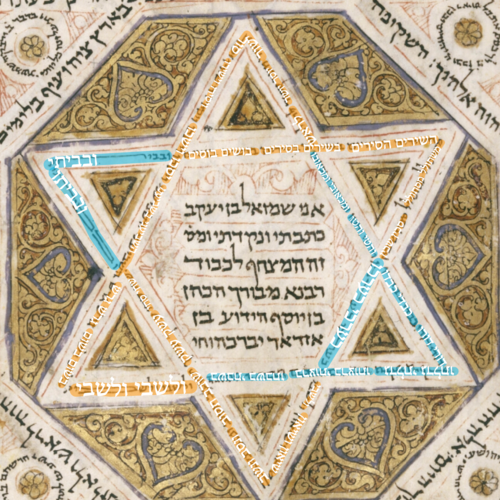
In his lecture, Christopher Decker used representations of the Herodian temple to show the different forms in which the symbol of the temple had divergent intentions of representation, depending on the medium, sender and target audience. He emphasized that the memory of the temple was fluid and that the latter expressed itself in various ideas and forms, including pagan connotations. According to Decker, the appropriation of cultural elements of the Greco-Roman world by Judaism, which required explanation, first formed the foundation on which the Jewish religion could be represented. A Jewish identity in antiquity was only formed in its specific visual language in the process between inculturation and differentiation from its pagan environment. Among other things, he pointed to the Bar Kochba coins as an example of how this medium could be used to spread ideological messages.
Inculturation, Decker concluded, represented the ground on which Jewish symbolism and identity could develop and grow.
Finally, Arnaldo Marcone addressed the concept of "Judaeophobia". He described Peter Schäfer's view that anti-Semitism has its origins in antiquity, even before Hellenism.
Schäfer's criticism of approaches that attribute anti-Semitism to the particularity of the Jews or their religion was also mentioned. The methodological premise of these was that the unique cultural, religious and social characteristics of Judaism were themselves the causes of what would later become known as anti-Semitism.
It is dangerous that the substantialist assumes a monolithic anti-Semitism that arises from the essence of Judaism itself. As a result, there is a danger of confusing cause with pretext and ultimately blaming the Jews for what happened to them. Schäfer prefers a synthetic approach that uses both models and has led him to the following assertion: In anti-Semitism there always needs to be both components, namely anti-Semitism and the Jew or Judaism, because anti-Semitism always arises in the mind of the anti-Semite, but needs an object.
A final summary of the event shows: Jewish identity in antiquity was a dynamic process and moved in a complex field of tension between integration, demarcation and external attribution. On the one hand, it shows that Jewish life was characterized by functioning coexistence and institutional integration, but on the other hand also by the seemingly ever-present "Judaeophobia". Crucial factors in the formation of identity were literature, religious practices and symbols, with the latter in particular adapting to changing historical contexts.
(Editor: Annalena Bauer)
![[Übersetzen nach: English]](/fileadmin/_processed_/4/9/csm_Judaephobia_3e287163c4.jpeg "[Übersetzen nach: English]")
-
 Date 15 December 2025
 -
 Time 14:22 UTC+01:00
 -
 Participation
 -
 Language
 -
 Contact
 -
 Location
 -
Registration? No