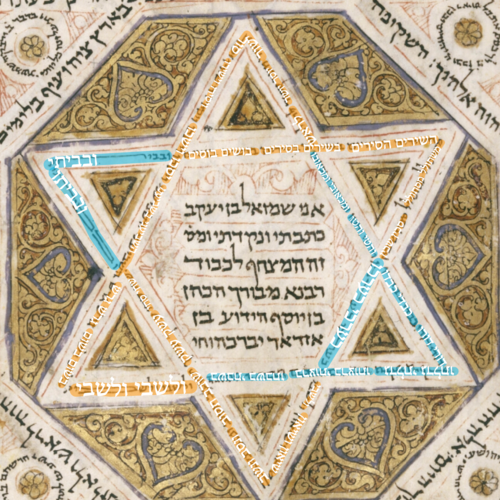
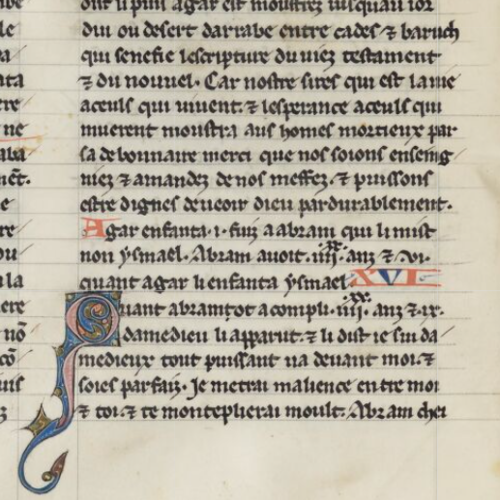
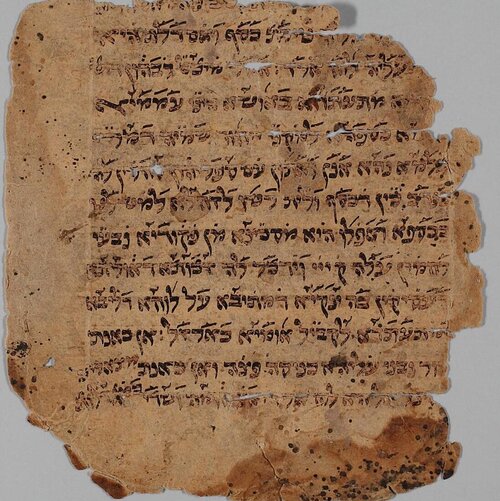
Interpretation of the month Kislev

The voice is the voice of Jacob (Gen 27:22)

The voice that wails like this is the voice of Jacob's children, who are slain by the hands of the wicked.

—Qalonymos ben Yehuda from Mainz

Jacob laughed when I reminded him of the jasmine fields of our youth. Strange, just when he laughs, I hear a furtive whimper in his voice.

—Meir Shalev, Esaw

The Chair of Bible and Jewish Bible Interpretation is the only one of its kind in Germany that deals with the text, tradition, exegetical reception and modern interpretation of the Hebrew Bible from antiquity to modern times in teaching and research. The field of research into biblical history and literature alone covers a historical framework of more than 1000 years. If one adds to this the sources for Jewish biblical interpretation in the Middle Ages and modern times as well as the Masorah as a link between the (Masoretic) biblical text and its interpretation, this subject ideally covers more than 2500 years, which need to be surveyed in literary-specific questions of detail as well as in increasingly interdisciplinary questions and research approaches. With the exception of a few sources on Jewish biblical interpretation in the 19th and 20th centuries, all the key sources are written in Hebrew and Aramaic.

The Heidelberg Chair focuses on the one hand on Masoretic Bible text and manuscript research (9th-13th centuries), and on the other hand on sources for Jewish Bible interpretation from the first half of the 10th to the second half of the 13th century, as well as on the 19th and 20th centuries.

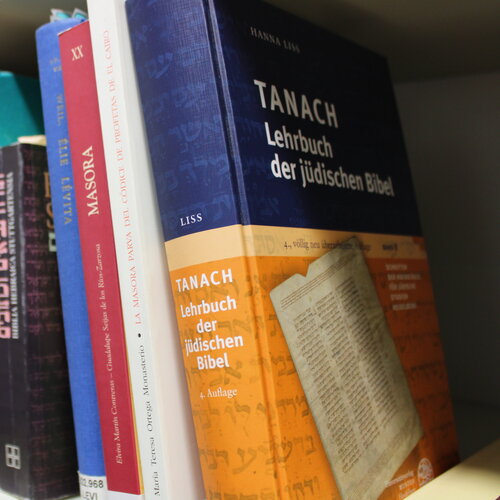
Bücher: Tanach, Liss

Main research areas

Only the so-called Masora from Eretz Israel, i.e. the Masoretic hypertext with vocalization, accentuation and the addition of various annotations, allows the ancient consonantal text (Qumran) to become a medieval Masoretic text. The aim of the research at the chair is the first study of the Western European (Ashkenazic) Masora tradition between the 11th and 15th centuries, which differs from the Oriental Masora philologically and in its external appearance as a masora figurata. It also deals with the process of inculturation of the masora and the Hebrew Bible text into the Christian environment (architecture; book art).

The Heidelberg Chair focuses in particular on the interpretative tradition of the medieval northern French school of exegetes, i.e. the exegetical commentaries of R. Shelomo Yitzchaqi (RaShY) and his school, R. Avraham Ibn Ezra, the members of the Qimchi family and R. Moshe ben Nachman ('RaMBaN = Nachmanides'). In addition, the surviving Hebrew-French Bible glossaries, especially from the 13th century, are also dealt with. These Bible glossaries, which reproduce the vernacular glosses in Hebrew graphics, are exceptional witnesses not only for exegetical and cultural-historical Judaic research, but also for morphological, phonological and lexical research into Old French between the 11th and 13th centuries. They form fundamental texts for research into the interrelations between Jewish intellectual history and the non-Jewish environment.

The biblical interpretation of the representatives of the so-called science of Judaism in Germany and Eastern Europe is being researched primarily with regard to its influence on modern Judaism and its understanding of religion and culture.

Courses

The courses are regularly linked back to the main areas of research.

The entire spectrum of the subject - from the biblical traditions to the latest interpretative literature - is covered and dealt with in teaching on the Bachelor's and Master's degree courses.

In cooperation with the Abraham Berliner Center , workshops and lectures are regularly held with international guest scholars.

Teaching

Winter semester 2025/2026

  • Advanced seminar / exercise: The temple: sacred place, fiction, utopia

Leader: Prof. Dr. Hanna Liss

Wednesday, 9.15-10.45 a.m., S 3

  • Proseminar / Exercise: Yaaqov and Esaw - hostile antagonists?

Leader: Prof. Dr. Hanna Liss

Wednesday, 11.15-12.45, S 3

  • Advanced seminar / exercise: The significance of the Masora in medieval Ashkenaz

Leader: Prof. Dr. Hanna Liss

Thursday, 09.15-10.45, S 3


Research projects at a glance

Masorah Rearranged: Eight Masoretic Lists in MS London Oriental 2091, fol. 335vcorpus masoreticum working papers 6 (2023).

Corpus Masoreticum

Paris Arsenal 5956

Bible Glossaries

Berlin_SPK_Fragment_zum_Hohelied_Public_Domain_1.0

Biblia Rabbinica


Events

No news available.

Past Events

Second restitution to the rabbinical seminary in Budapest

News Press

On November 12, 2025, Philipp Zschommler visited the Országos Rabbiképző - Zsidó Egyetem (OR-ZSE) in Budapest. During this visit, he presented the university library with further books that had been looted from the library of the rabbinical seminary by the National Socialists in 1944. Library director Tamási Balázs accepted the volumes

Background to the research

For many years, Philipp Zschommler has been researching the origin and provenance of books that were confiscated from Jewish private individuals and institutions during the Nazi era. On this basis, it has already been possible to identify volumes in the university library that originated from the library of the Budapest Rabbinical Seminary.

earlier returns

Several rare prints from the 16th century had already been recognized as looted property and returned to the OR-ZSE. The ceremonial restitution of these four Hebrew book rarities took place on April 26, 2023.

the three volumes now returned

The three volumes now returned to Budapest are specialized works from various fields of Jewish studies published in the 19th century. They were printed in Paris, Munich and Izmir and reflect different regional and scientific traditions of Jewish scholarship.

1. Version arabe d'Isaïe de R. Saadia ben Josef al-Fayyûmî
This volume contains the Arabic translation of Isaiah by Saadiah Gaon with Hebrew annotations and a French translation, compiled by Joseph and Hartwig Derenbourg. The third volume of this classic edition of French Oriental studies was published in 1896 by Ernest Leroux in Paris; in the foreword, Hartwig Derenbourg thanks Rabbi and Orientalist Vilmos Bacher, the former rector of the Rabbinical Seminary, for his support.

2. Raphael Rabbinovicz: Variae Lectiones in Mischnam et in Talmud Babylonicum (Berakhot)
This work was published in 1867 in Munich by the royal printing house H. Rösl. It is part of a monumental multi-volume project that collects and scientifically annotates text variants of the manuscripts and early prints of the Babylonian Talmud and is one of the fundamental sources of Talmudic textual criticism and manuscript research.

3. Rabbi Eliyahu Hacohen ha-Itamari: Sefer Ene ha-Edah
The author, a rabbi in Izmir (1640-1729), was a staunch opponent of the false messiah Sabbatai Zvi. The work was first published in Izmir in 1863 and contains drashot on Bereshit, Shemot and the Book of Esther.

(original source)

2. Restitution nach Budapest, Zschommler und Balázs
  • Date: 16 December 2025
    Date 16 December 2025
  • Time: 
	13:22
	UTC+01:00
    Time 13:22 UTC+01:00
  • Participation:
    Participation
  • Language:
    Language
  • Contact:
    Contact
  • Location:
    Location
  • Registration? No

News


Get to know the ABC and become a member

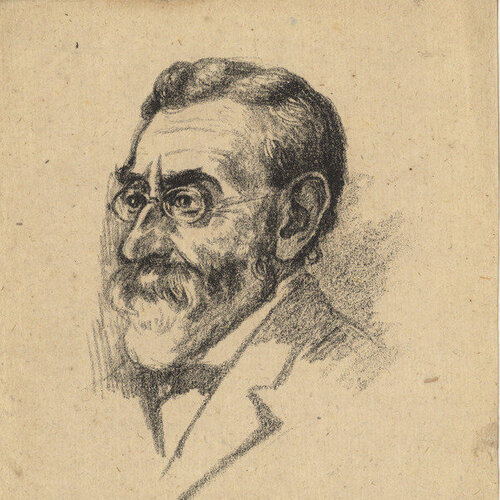
Portrait of Professor Abraham Berliner (1833-1914)

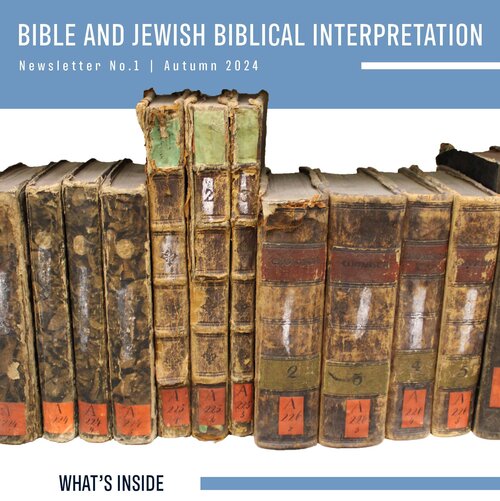
Newsletter cover Lehrstuhl Bibel