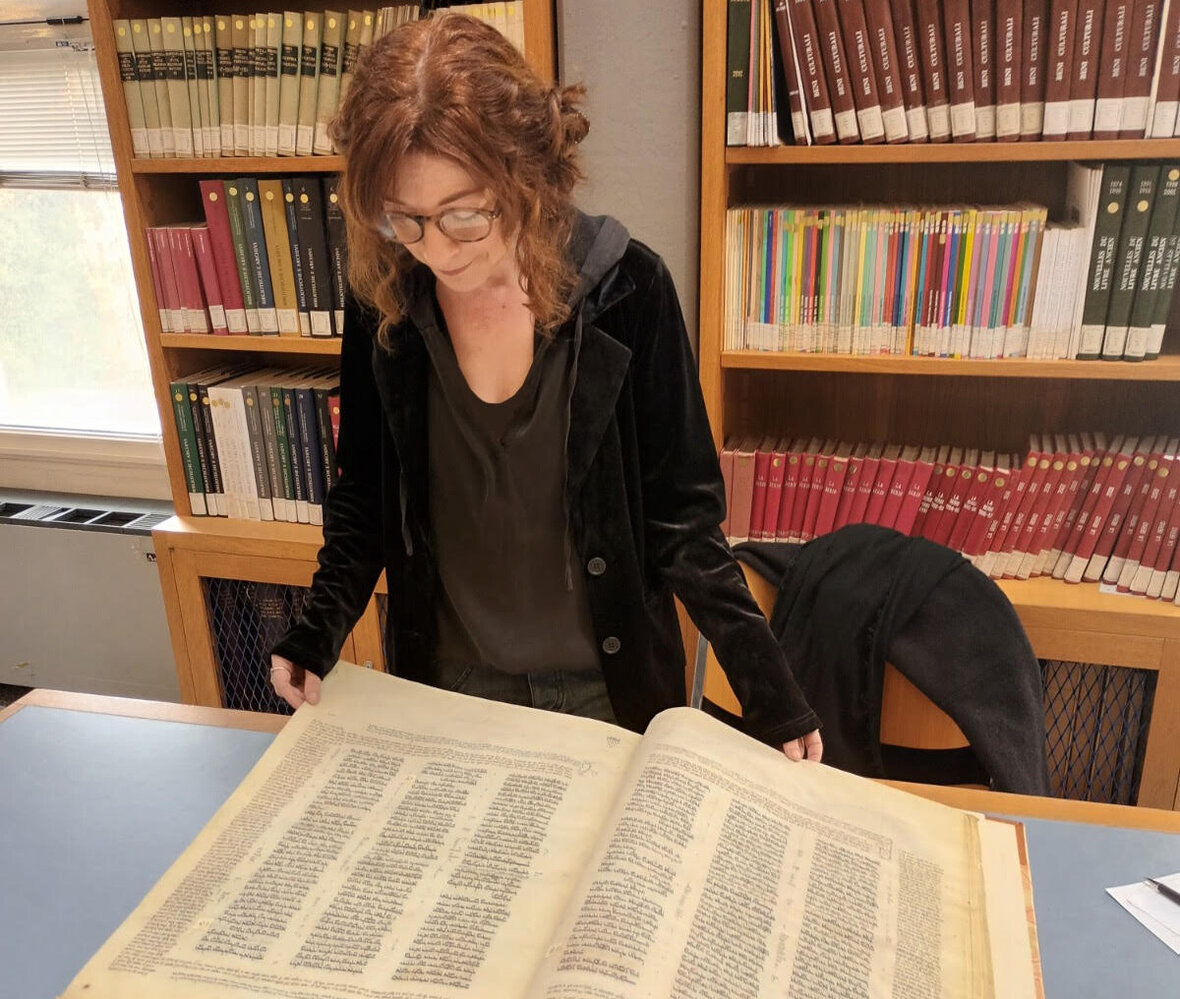
Sebastian Seemann am Arbeitsplatz. Foto © Ekaterina 'Qeto' Gotsiridze
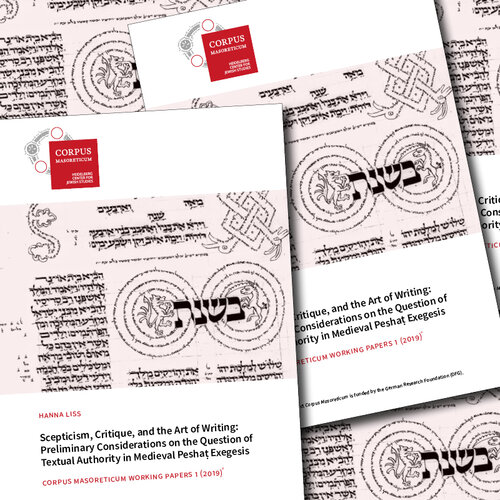
Star of David, RNL (B19a), fol. 474r (transcribed). Masorah Rearranged: Eight Masoretic Lists in MS London Oriental 2091, fol. 335v corpus masoreticum working papers 6 (2023).
Fische, British.Library.Or.2091__251r
British.Library.Or.2091, 20r edit

Corpus Masoreticum. The Inculturation of Masora into Jewish Law and Lore from the 11th to the 14th Centuries. Digital Reconstruction of a Forgotten Intellectual Culture

Funded by the German Research Foundation

This project began in 2018 and is scheduled to run for 12 years. The aim is to conduct the first philological study of the Western European Masoretic tradition between the 11th and 14th centuries. In the first two funding phases, the richly decorated calligraphic Ashkenazic Bibles, the linear Masora and the micrographic Masora figurata illustrations in various manuscripts were examined philologically. The Masora figurata as well as significant parts of the linear Masora magna from nine medieval manuscripts have been transcribed and made available to the public in open access. So far, groundbreaking results have been achieved with regard to researching the philological quality of the Masora figurata as well as its exegetical and pedagogical function in various manuscripts.

As a digital project, Corpus Masoreticum is supported by a highly scalable digital cloud infrastructure that covers the entire workflow for the management of manuscript holdings, transcriptions, analyses and publications. Its centerpiece, the digital scholarly editing workspace BIMA 2.1, is based on three fundamental concepts: 1. IIIF-compatible manuscript repositories, 2. SVG-TextPath transcriptions, 3. a Neo4j graph database based on a loosely coupled text-as-a-graph data model. To date, BIMA 2. 1 hosts 112 manuscripts and displays over 7,000 (partially or fully transcribed) pages with almost 300,000 transcription lines, of which more than 500 pages have already been published under an Open Access Creative Commons CC-BY-SA 4.0 license:

Corpus Masoreticum & BIMA 2.1

The computational toolkits have been enhanced by the implementation of methods and algorithms such as machine text recognition (HTR) and correspondence analysis/seriation of lemma features.

Corpus Masoreticum runs its own publication series: Corpus Masoreticum Working Papers


KNOWLEDGE TRANSFER ACTIVITIES AND OUTREACH:

Multimedia contributions for the Corpus Masoreticum

Dokumentationsvideos

Documentary videos, in which the aims and methods of the project as well as individual artifacts are presented, provide the interested non-specialist public with insights into the fascinating world of Jewish biblical interpretation, the masora figurata and the Hebrew book and knowledge culture of the Middle Ages.

"When Bible meets literature - Yaaqov's and Esaw's unknown pages", series "Madda ba-Bayit" 'Wissenschft zu Hause' of the Central Council of Jews in Germany: https://youtu.be/yOk0ZXdAxuE

Documentary videos from the various projects:
https://www.youtube.com/channel/UCalER-_CjwOedcaZrGBG0nQ
https://t1p.de/BIMA-Video1
https://t1p.de/BIMA-Video2

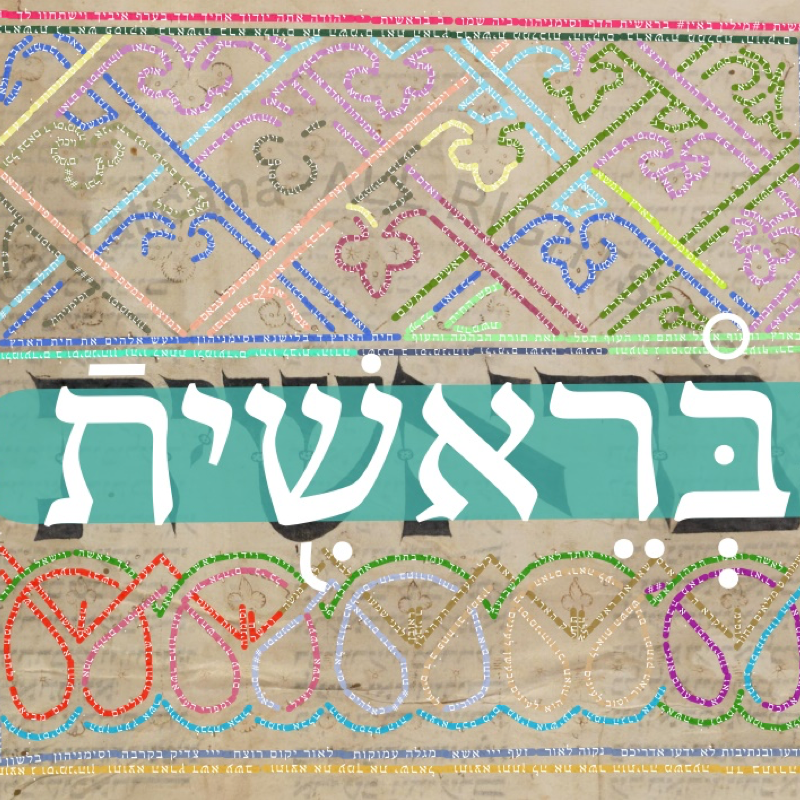
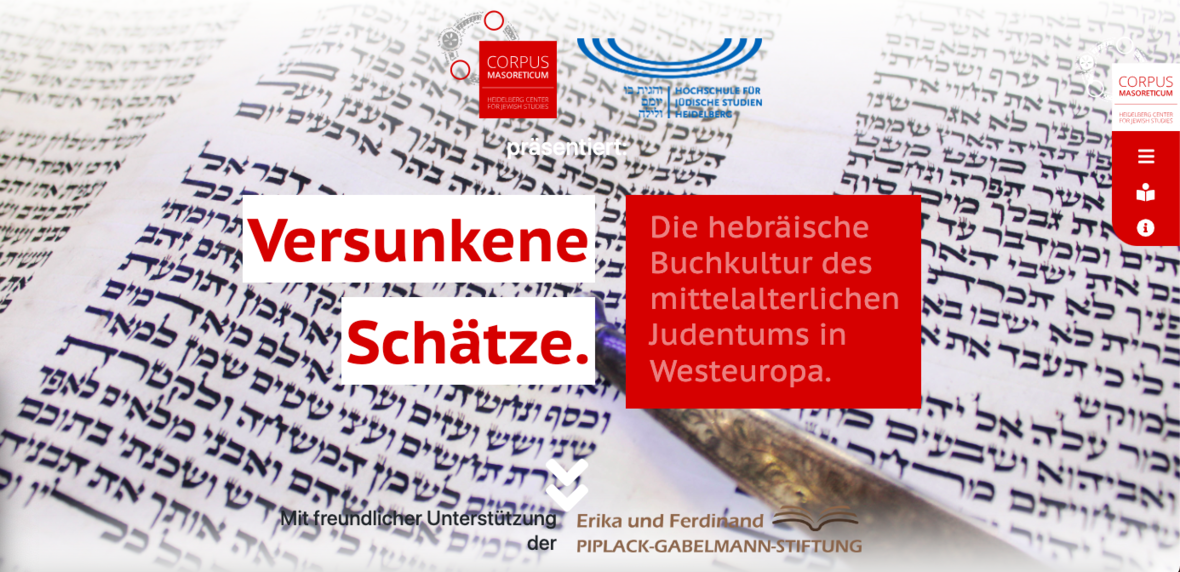
Multimedia online exhibition: "Versunkene Schätze: Die hebräische Buchkultur des mittelalterlichen Judentums in Westeuropa"

Visit the online exhibition

The Chair of "Bible and Jewish Biblical Interpretation" took the anniversary of "1700 years of Jewish life in Germany" as an opportunity to present the subject area of the material heritage of Ashkenazi Judaism to a wider public. In this context, an online exhibition was created to present Jewish scholarly culture in a multimedia format using Hebrew medieval manuscripts.

As a means of academic communication, the project has set itself the goal of not only addressing the painful history of Judaism in relation to ecclesiastical power, but also making the positive aspects of cultural and theological synergies visible: The exhibition artistically and aesthetically juxtaposes the antagonism of church and Judaism with the image of a culturally fruitful interdependence between the respective environmental cultures and the Jewish educational society, which has only begun to be recognized and appreciated so far.

Concept and text: Prof. Dr. Hanna Liss; web design, video & audio production: Clemens Liedtke, M.A.


Current events of the Corpus Masoreticum

No news available.

Past events

When a small idea from Heidelberg becomes a family program at the museum in Braunschweig

News

We’re thrilled: The Braunschweig City Museum has taken up our menorah idea and is turning it into a workshop as part of the Kulturmeile. On September 13, 2026, families can come together there to build a menorah out of interlocking building blocks—based on our idea.

Especially at a time when anti-Semitic incidents in Germany are at a high level and many Jewish people feel unsettled, we find it all the more wonderful that symbols of Judaism can be introduced in such an innocuous and playful way.

From the museum’s announcement: “How can you rediscover a millennia-old symbol using colorful building blocks? In our family workshop, we’ll build a menorah—the seven-branched candelabrum symbol of Judaism—together using LEGO bricks. The menorah is one of the oldest and most significant symbols of Judaism. It stood in the Temple in Jerusalem and to this day represents light, hope, wisdom, and community. In the workshop, young and old alike will learn about its history in a playful way—and then design their own LEGO Menorah, based on an idea from the Heidelberg University of Jewish Studies.” [Which, in turn, drew inspiration from rebrickable .]

And from the building instructions: “The menorah is a seven-branched candelabrum. Along with the Star of David, the menorah is one of the best-known and most widely used symbols of Judaism and adorns the Israeli coat of arms. … Its seven branches represent the six days of creation and Shabbat, the Jewish day of rest. … It commemorates the history of Judaism and symbolizes light, knowledge, and faith.

We thank the museum team in Braunschweig for this wonderful project and wish all participants a bright, curious afternoon! 🌟
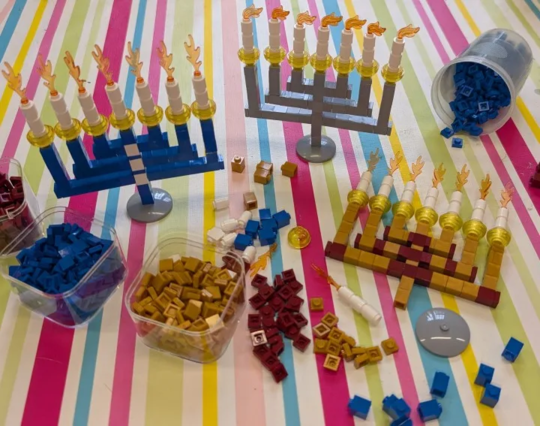
Menorot im Museum
  • Date: 10 September 2026
    Date 10 September 2026
  • Time: 
	07:46
	UTC+02:00
    Time 07:46 UTC+02:00
  • Participation:
    Participation
  • Language:
    Language
  • Contact:
    Contact
  • Location:
    Location
  • Registration? No

News


Publications

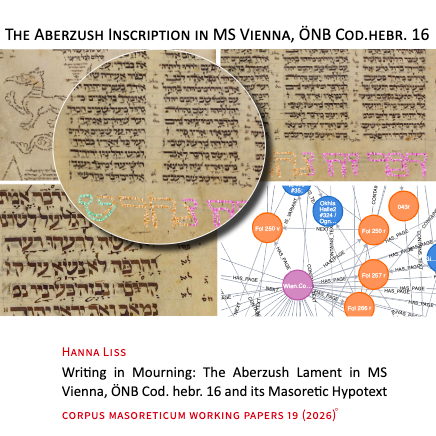
Writing in Mourning: The Aberzush Lament in MS Vienna, ÖNB Cod. hebr. 16 and its Masoretic Hypotext. Hanna Liss

Writing in Mourning: The Aberzush Lament in MS Vienna, ÖNB Cod. hebr. 16 and its Masoretic Hypotext 


Hanna Liss


read the article

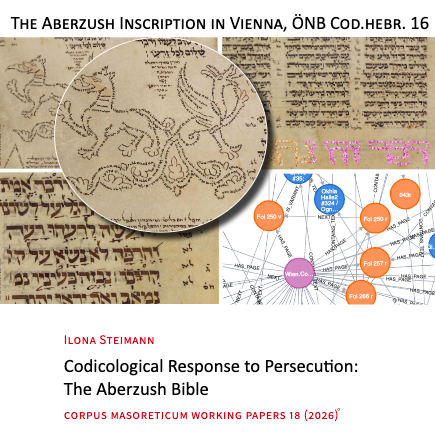
Codicological Response to Persecution: The Aberzush Bible. Ilona Steimann

Codicological Response to Persecution: The Aberzush Bible


Ilona Steimann


read the article

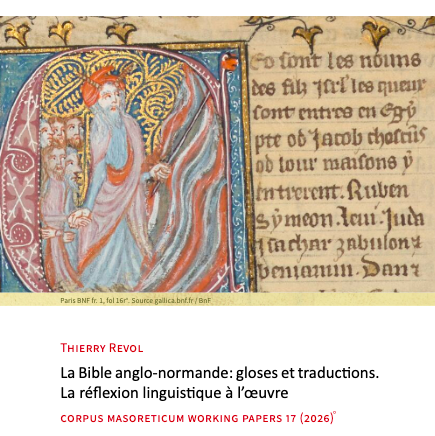
La Bible anglo-normande: gloses et traductions La réflexion linguistique à l’œuvre Thierry Revol

La Bible anglo-normande: gloses et traductions La réflexion linguistique à l’œuvre 


Thierry Revol


read the article

publications corpus masoreticum

Corpus Masoreticum

Further Publications


Contact

Logo Corpus Masoreticum

Corpus Masoreticum

Show Contacts