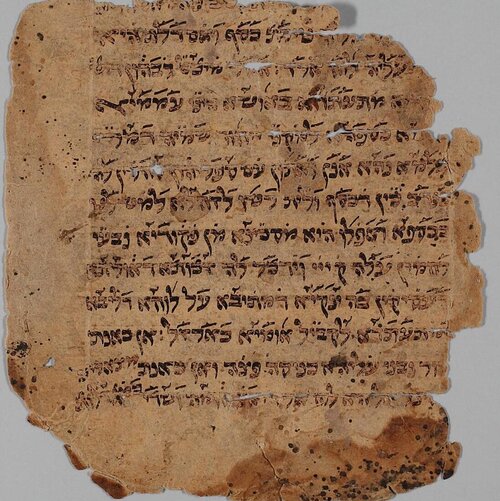
Interpretation of the month of Nisan

A person, if he wants to bring a sacrifice from you: קרבן. It is to be greatly regretted that there is no German word by which the concept inherent in the expression קרבן can be rendered unclouded. Unfortunately, the word "sacrifice", which according to its origin from the Latin offero only means "offering", has become associated with the idea of destructive, annihilating loss, which is completely alien, indeed contrary to the essence and concept of the Hebrew קרבן. Even the original meaning of sacrifice: presentation, offering, is not quite adequate to קרבן. The term: to offer, to present, presupposes a wish, a desire, a need for the thing offered on the part of the person to whom it is offered, which is to be satisfied by the offering. It cannot be separated from the idea of a gift. However, the term קרבן is far removed from all of these. It never means: gift, endowment, only occurs in relation from man to God and can only be understood from the meaning inherent in the root קרב. קרב means: to draw near, to come closer, i.e. to enter into a more intimate relationship with someone. With this, however, the term הקרבה is immediately indexed to the most positive attainment of a much more elevated existence as a goal and effect, thus rejecting every opposing idea of destruction, annihilation, loss, just as it simultaneously denotes not a need of the one to whom a קרבן "approaches", but the need of the מקרביב as the one that has to find its satisfaction in the קרבן. The מקריב desires that something of his should enter into a closer, nearer relationship with God, that is his קרבן, and the act through which it is to enter into this greater closeness to God is called הקרבה.

Samson Raphael Hirsch (1808-1888), The Pentateuch. Translated and explained. Third part: Leviticus, 1873, from the commentary on Lev 1:2

The Chair of Bible and Jewish Bible Interpretation is the only one of its kind in Germany that deals with the text, tradition, exegetical reception and modern interpretation of the Hebrew Bible from antiquity to modern times in teaching and research. The field of research into biblical history and literature alone covers a historical framework of more than 1000 years. If one adds to this the sources for Jewish biblical interpretation in the Middle Ages and modern times as well as the Masorah as a link between the (Masoretic) biblical text and its interpretation, this subject ideally covers more than 2500 years, which need to be surveyed in literary-specific questions of detail as well as in increasingly interdisciplinary questions and research approaches. With the exception of a few sources on Jewish biblical interpretation in the 19th and 20th centuries, all the key sources are written in Hebrew and Aramaic.

The Heidelberg Chair focuses on the one hand on Masoretic Bible text and manuscript research (9th-13th centuries), and on the other hand on sources for Jewish Bible interpretation from the first half of the 10th to the second half of the 13th century, as well as on the 19th and 20th centuries.

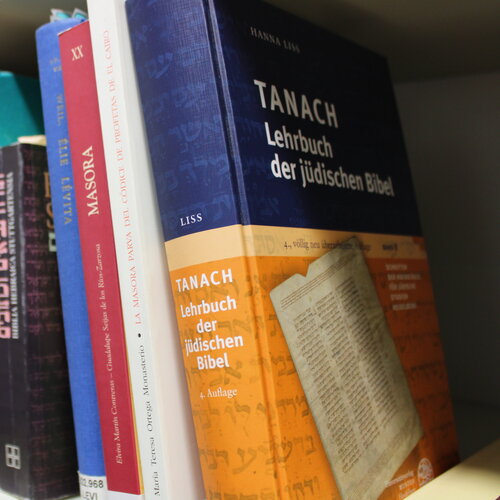
Bücher: Tanach, Liss

Main research areas

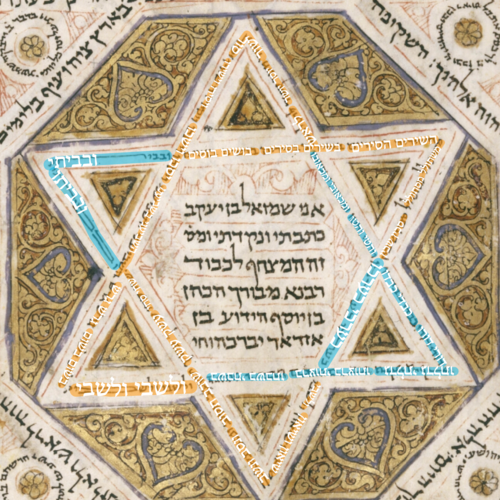
Only the so-called Masora from Eretz Israel, i.e. the Masoretic hypertext with vocalization, accentuation and the addition of various annotations, allows the ancient consonantal text (Qumran) to become a medieval Masoretic text. The aim of the research at the chair is the first study of the Western European (Ashkenazic) Masora tradition between the 11th and 15th centuries, which differs from the Oriental Masora philologically and in its external appearance as a masora figurata. It also deals with the process of inculturation of the masora and the Hebrew Bible text into the Christian environment (architecture; book art).

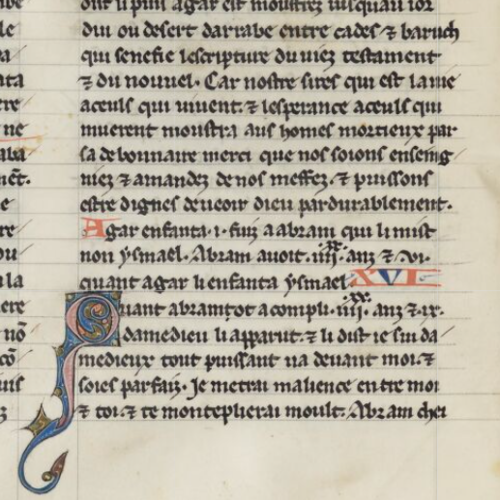
The Heidelberg Chair focuses in particular on the interpretative tradition of the medieval northern French school of exegetes, i.e. the exegetical commentaries of R. Shelomo Yitzchaqi (RaShY) and his school, R. Avraham Ibn Ezra, the members of the Qimchi family and R. Moshe ben Nachman ('RaMBaN = Nachmanides'). In addition, the surviving Hebrew-French Bible glossaries, especially from the 13th century, are also dealt with. These Bible glossaries, which reproduce the vernacular glosses in Hebrew graphics, are exceptional witnesses not only for exegetical and cultural-historical Judaic research, but also for morphological, phonological and lexical research into Old French between the 11th and 13th centuries. They form fundamental texts for research into the interrelations between Jewish intellectual history and the non-Jewish environment.

The biblical interpretation of the representatives of the so-called science of Judaism in Germany and Eastern Europe is being researched primarily with regard to its influence on modern Judaism and its understanding of religion and culture.

Courses

The courses are regularly linked back to the main areas of research.

The entire spectrum of the subject - from the biblical traditions to the latest interpretative literature - is covered and dealt with in teaching on the Bachelor's and Master's degree courses.

In cooperation with the Abraham Berliner Center , workshops and lectures are regularly held with international guest scholars.

Teaching

Winter semester 2025/2026

  • Advanced seminar / exercise: The temple: sacred place, fiction, utopia

Leader: Prof. Dr. Hanna Liss

Wednesday, 9.15-10.45 a.m., S 3

  • Proseminar / Exercise: Yaaqov and Esaw - hostile antagonists?

Leader: Prof. Dr. Hanna Liss

Wednesday, 11.15-12.45, S 3

  • Advanced seminar / exercise: The significance of the Masora in medieval Ashkenaz

Leader: Prof. Dr. Hanna Liss

Thursday, 09.15-10.45, S 3


Research projects at a glance

Masorah Rearranged: Eight Masoretic Lists in MS London Oriental 2091, fol. 335vcorpus masoreticum working papers 6 (2023).

Corpus Masoreticum

Paris Arsenal 5956

Bible Glossaries

Berlin_SPK_Fragment_zum_Hohelied_Public_Domain_1.0

Biblia Rabbinica


Events

No news available.

Past Events

"...more worthy than all citizens of any city". 950th anniversary of King Henry IV's charter for the "Jews and other Wormsers" (1074 - 2024)

Corpus Masoreticum Bible and Jewish Biblical Interpretation Lecture

Abraham Berliner Centre


Dr Gerold Bönnen (Director of the Worms City Archive & the Jewish Museum Worms, Dr h.c. University of Heidelberg)
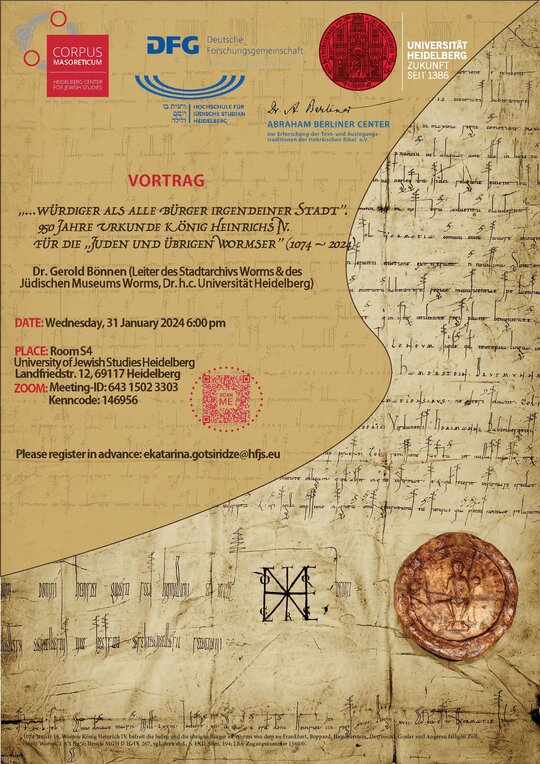
Bönnen

News


Get to know the ABC and become a member

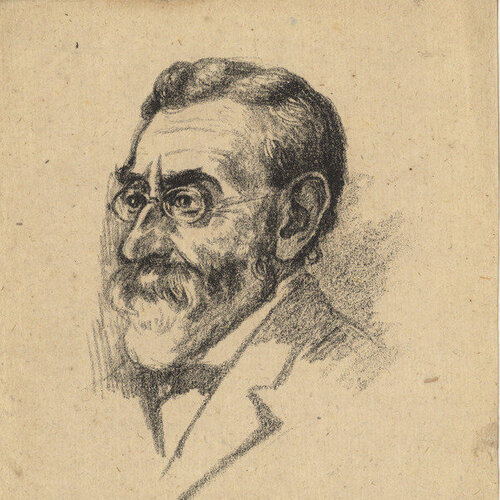
Portrait of Professor Abraham Berliner (1833-1914)

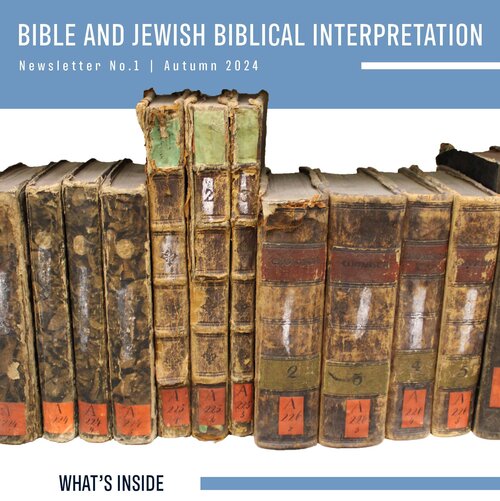
Newsletter cover Lehrstuhl Bibel