





Federal Minister Prien's Heidelberg University lecture with a wake-up call: "Perspectives on the prevention of anti-Semitism in school and extracurricular contexts after October 7"
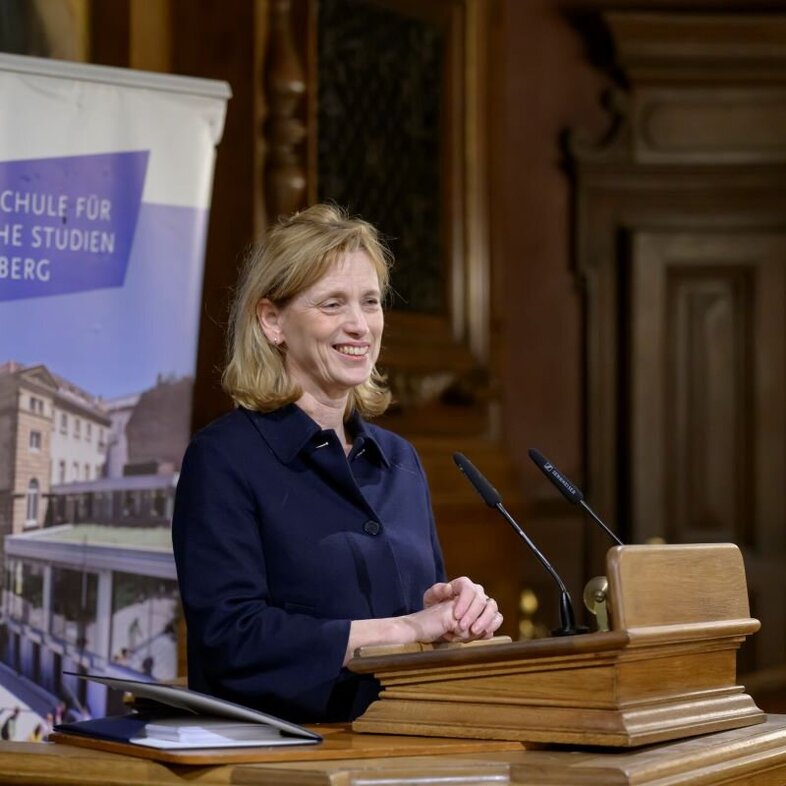
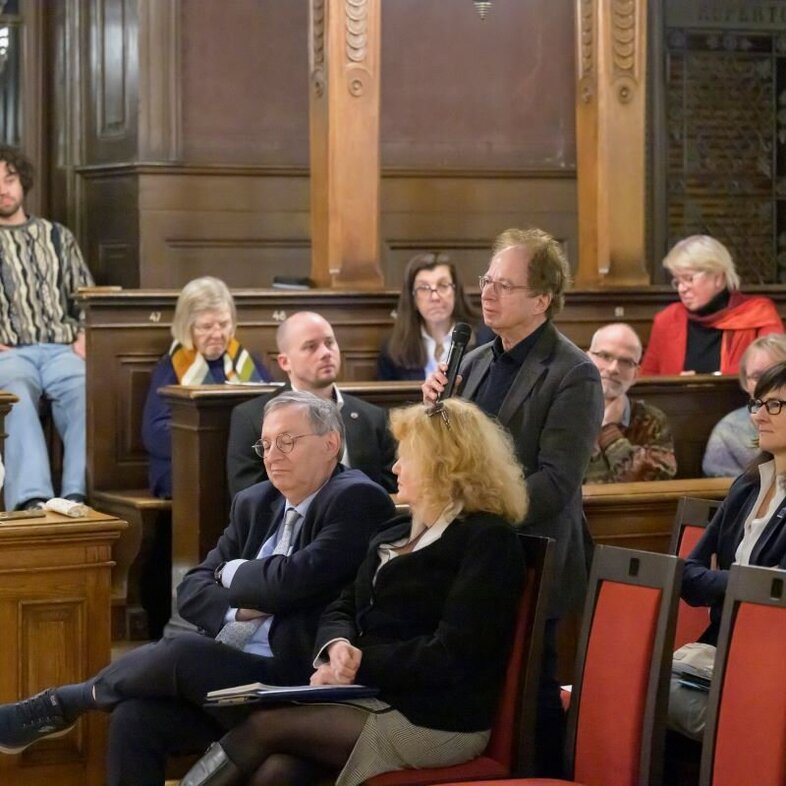
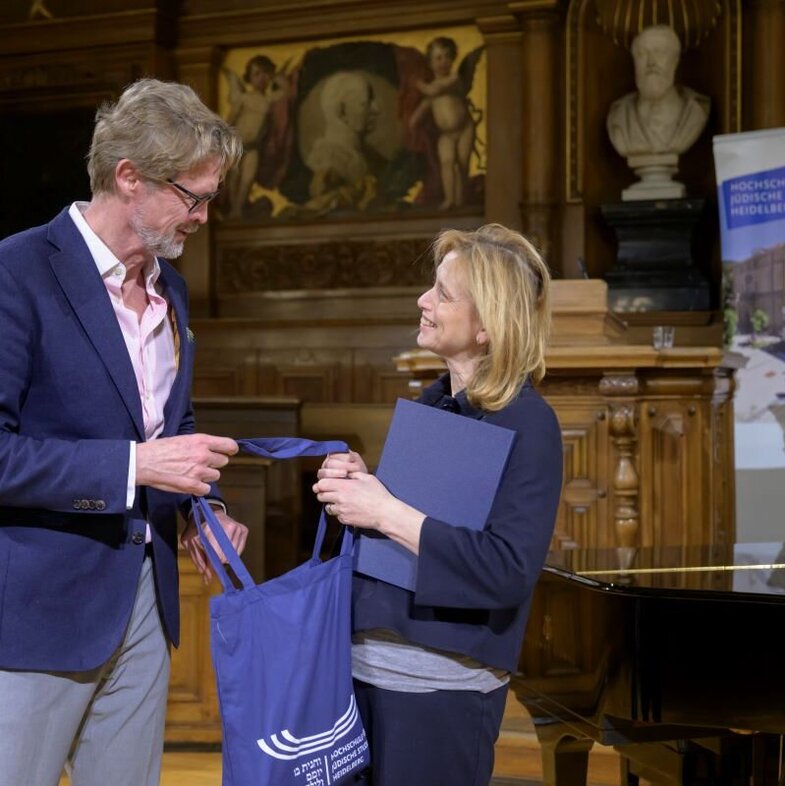
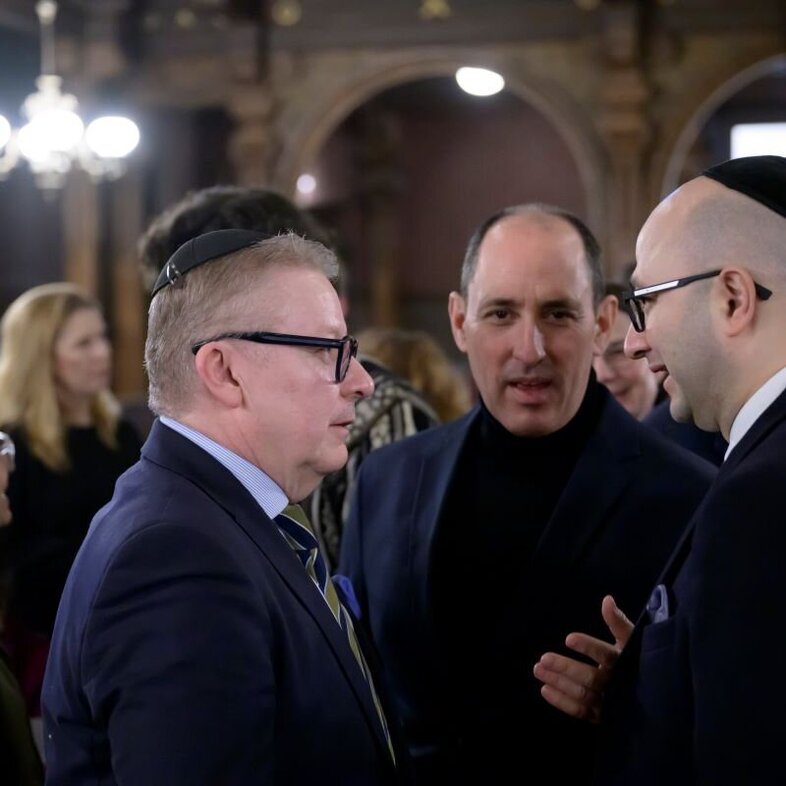
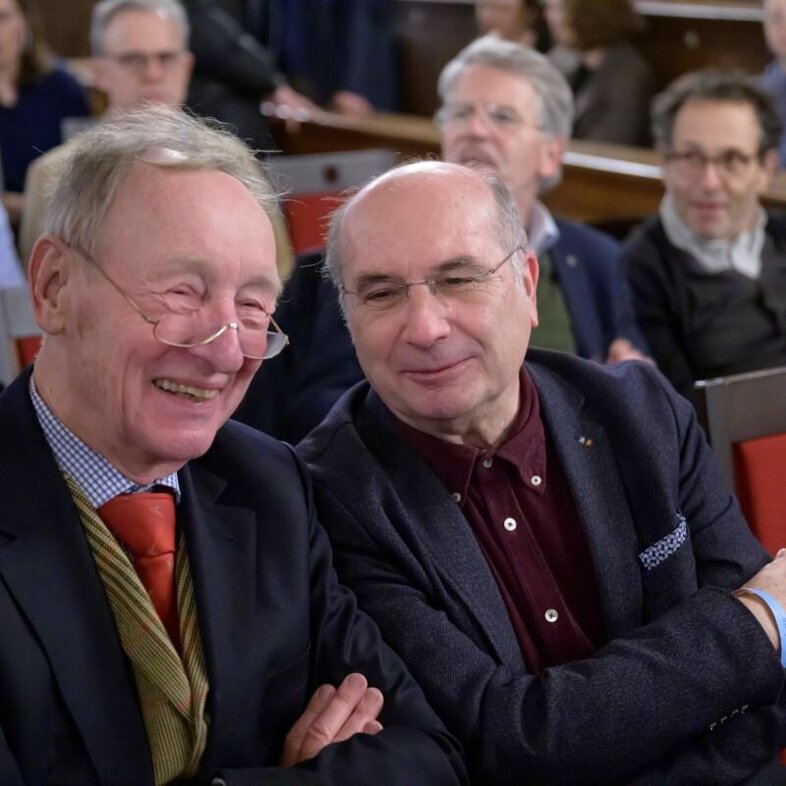
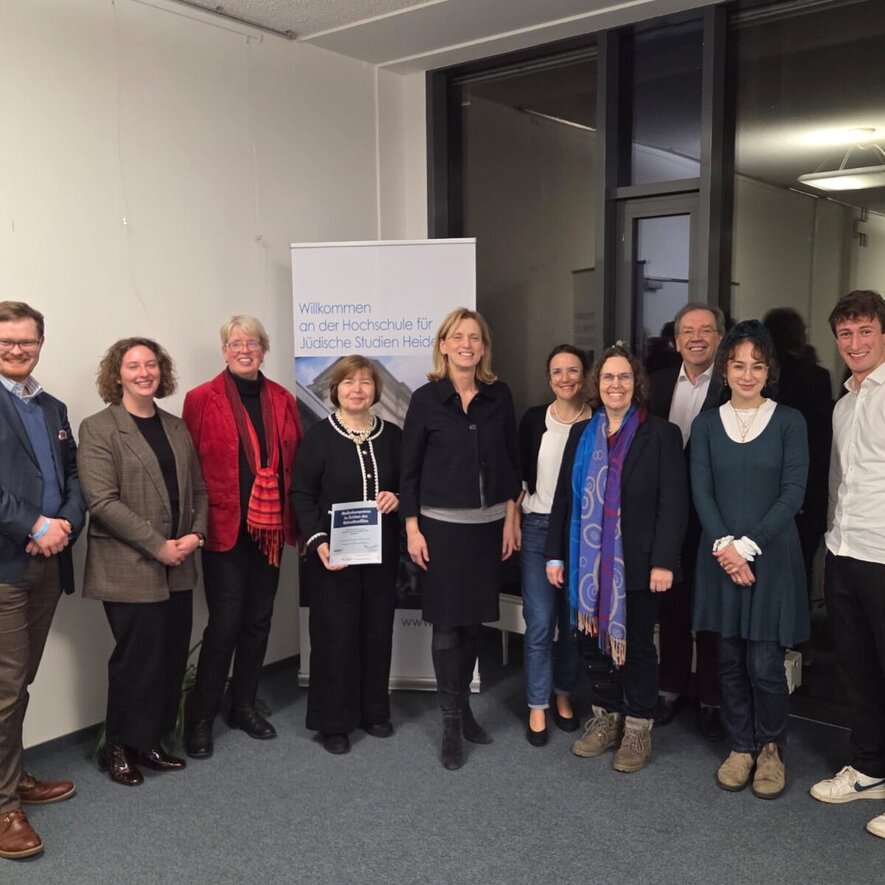
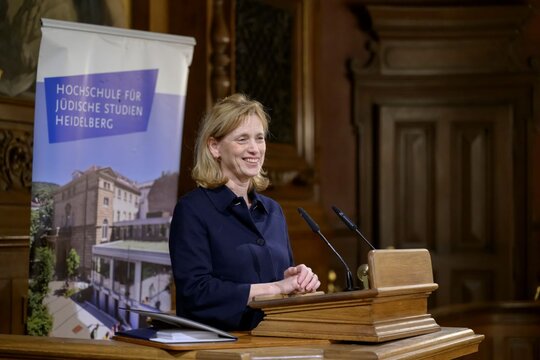
On January 22, 2026, around 140 guests gathered in the Old Auditorium of Heidelberg University for the HfJS's Heidelberg University Lecture by Federal Minister Karin Prien. Prien heads the Ministry of Education, Family Affairs, Senior Citizens, Women and Youth. The topic "Perspectives on the prevention of anti-Semitism in school and extracurricular contexts after October 7" had triggered security concerns - fortunately, they did not materialize
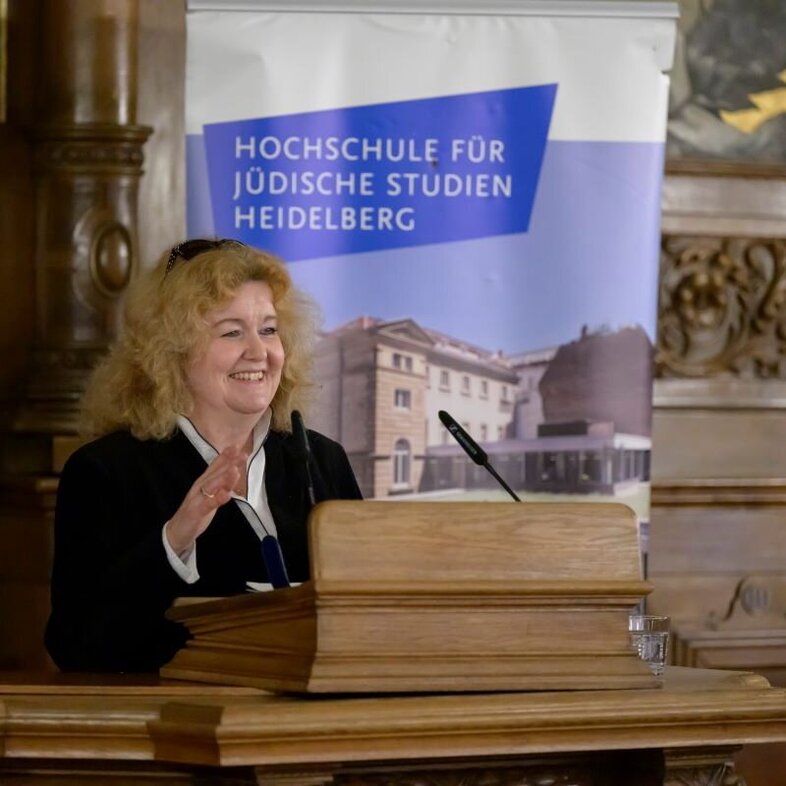
Prof. Barbara Traub (Spokeswoman of the Board of the Jewish Religious Community of Württemberg, on the Presidium of the Central Council of Jews and Chairwoman of the University Board of Trustees) and HfJS Rector Dr. Andreas Brämer welcomed the audience in advance. Prof. Traub warned urgently that October 7, 2023 is not history: Hamas' divisive tactics continue to have an impact - from Hanukkah murders in Sydney to radical left-wing violence in Leipzig and Freiburg. Education against anti-Semitism must make our society resilient
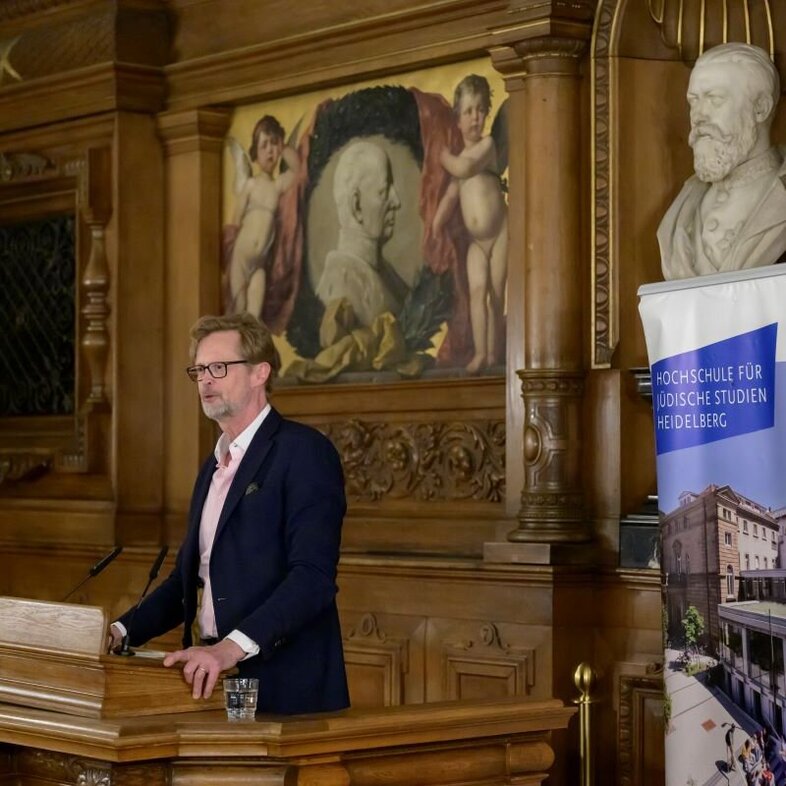
Dr. Brämer introduced Karin Prien - the first minister with Jewish roots in the federal cabinet - and emphasized her pioneering role in education prevention
Federal Minister Prien pulled the emergency brake in front of the guests from politics, academia and Jewish communities: "The taboo against hatred after the Holocaust has been torn apart - the beast is back," she quoted author Jessica Durlacher. October 7, 2023 had shaken the "Republic of Remembrance Germany" - anti-Semitism was being normalized again, in schools, networks and clubs. As a descendant of Jewish families, she asked her generation: "What did we do wrong?"
Prien called for a six-point plan against anti-Semitism that is "persistent": in-depth knowledge of the history of anti-Semitism and the Middle East context, prepared visits to memorial sites, a clear stance from teachers as representatives of the constitution. Emotions such as fear and envy must be reduced in order to create empathy. The ability to deal with conflict and digital media skills are essential in order to expose disinformation on platforms - her ministry supports projects such as the HfJS project against left-wing extremism
Prien made a particularly urgent plea for Jewish life to be made visible: away from the "passive victim" narrative and towards resistance fighters, cultural icons such as Heine or Einstein and lively events such as Jewrovision. She announced the funding of the Yad Vashem Education Center (€2 million confirmed) as a European center against anti-Semitism
Prien ended on a positive note: "The Republic of Remembrance is not at an end, but in transition." Germany stands for responsibility - from the relationship with Israel to Auschwitz trials. "Never again is not a foregone conclusion - every generation must remember anew." This was a thought that remains in the memory, as does Prien's six-point plan: it is not the culture of remembrance that is at an end, but the way we are used to remembering. While contemporary witnesses are becoming ever rarer and the biographies of German society ever more colorful, the culture of remembrance must also change. And we all have a duty - or, as Prien quoted Kant: there is a moral duty to be confident - which, unlike hope, is an active attitude in the here and now.
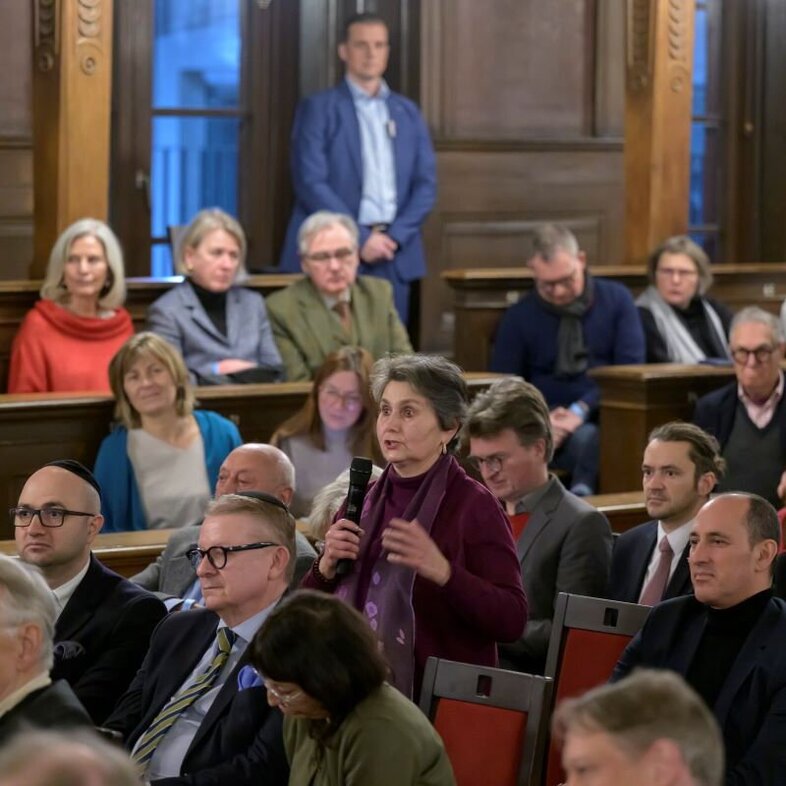
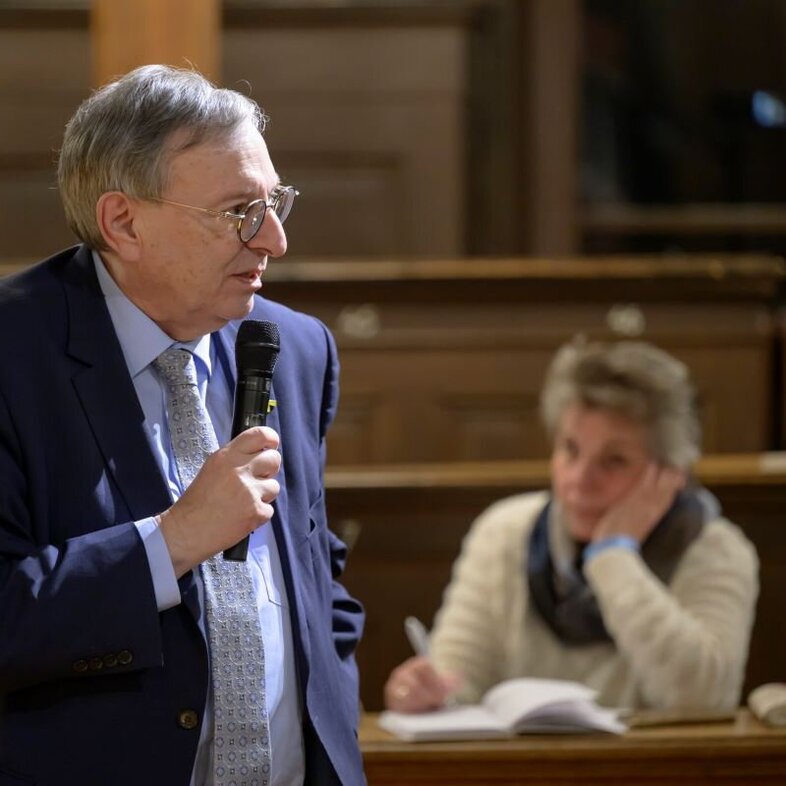
Following her presentation, Karin Prien took part in an extensive Q&A session with the audience. Rita Althausen, Member of the Board of IRG Baden, asked how the Minister was making concrete progress on the long overdue establishment of a German-Israeli youth organization. Prien made it clear that she had already raised additional funds in the German Bundestag. The real hurdle, however, was that the tried and tested models of the Franco-German and German-Polish youth organizations could not easily be transferred to a German-Israeli format from an Israeli perspective. Nevertheless, she affirmed her intention to significantly expand youth exchanges with Israel over the next three and a half years, not only in terms of quality but also in terms of quantity.
Viktor Marki from the Young Forum of the German-Israeli Society turned his attention to the situation at universities. He wanted to know what scientifically sound and demonstrably effective strategies the responsible ministry favors in order to reduce anti-Semitic incidents at universities and to strengthen both prevention work and sanctions - up to and including the de-registration of known extremist students. In her response, Prien emphasized that universities must take a critical look at how they organize everyday life for Jewish students In her view, it must be ensured that they can study without fear or restrictions. If - as she had been told - Jews at universities experienced massive encroachments on their basic rights, then "sometimes more intervention is needed in Germany - and in case of doubt, more enforcement".
Doron Kiesel, Director of the Jewish Academy at the Central Council of Jews in Germany, also took part in the discussion. He asked what role the Jewish institutions should play in the implementation of her education policy plans from the minister's perspective and how they could provide support within the framework of educational programs. Prien then turned directly to the Jewish community: she wished that Jews would not withdraw from the public discourse, but would make their positions clearly audible. The Jewish Academy is a central forum for this. At the same time, she criticized a widespread German attitude in which a lot is said "about Jews, often also about dead Jews, but too little is said about Jews themselves". This is where the majority society needs to change - and conversely, a Jewish community is needed that confidently demands to be included.
Dietrich Dancker from the Heidelberg-Rehovot Circle of Friends also spoke. He expressed his concern that the AfD could become prime minister of Saxony-Anhalt after the state elections in 2026, which could weaken the fight against anti-Semitism in eastern Germany in the long term. Prien warned against constantly conjuring up such a scenario. Instead, it is crucial that all democratic parties make a visible and tangible effort to prevent this outcome. Should the AfD nevertheless come into government, Prien said, democratic civil society in Saxony-Anhalt must be strengthened with all available means. They are already thinking about how corresponding support programs and structures could be designed. However, the primary goal remains to prevent precisely this outcome of the election through joint political action.
In response to the final question as to what possibilities Prien herself had to influence democracy education within the curricula, the Federal Minister had to point out that it was the responsibility of the federal states to draw up these plans, but immediately sent a message of confidence to us all: young people in particular do not yet have a complete view of the world and the majority of them are still accessible and it is precisely with them that it is worth engaging in conversation.
The federal minister's entire speech is available for download.
-
 Date 25 January 2026
 -
 Time 19:23 UTC+01:00
 -
 Participation
 -
 Language
 -
 Contact
 -
 Location
 -
Registration? No