

Interpretation of the month of Shvat

Then God spoke to Moses and said to him: I am HE WILL (Ex 6:2) But because Israel's present need is only a paradigm, the name becomes an eternal promise (...) J-h-w-h is the future tense of the oppressed and suffering. To the question will one help? will he save? The certain answer of this name is: He will! (...) This name is the exclusive property of Israel, its most precious possession. It cannot be found in any other religion.

Benno Jacob, The Book of Exodus, Stuttgart 1997, 70

The Chair of Bible and Jewish Bible Interpretation is the only one of its kind in Germany that deals with the text, tradition, exegetical reception and modern interpretation of the Hebrew Bible from antiquity to modern times in teaching and research. The field of research into biblical history and literature alone covers a historical framework of more than 1000 years. If one adds to this the sources for Jewish biblical interpretation in the Middle Ages and modern times as well as the Masorah as a link between the (Masoretic) biblical text and its interpretation, this subject ideally covers more than 2500 years, which need to be surveyed in literary-specific questions of detail as well as in increasingly interdisciplinary questions and research approaches. With the exception of a few sources on Jewish biblical interpretation in the 19th and 20th centuries, all the key sources are written in Hebrew and Aramaic.

The Heidelberg Chair focuses on the one hand on Masoretic Bible text and manuscript research (9th-13th centuries), and on the other hand on sources for Jewish Bible interpretation from the first half of the 10th to the second half of the 13th century, as well as on the 19th and 20th centuries.

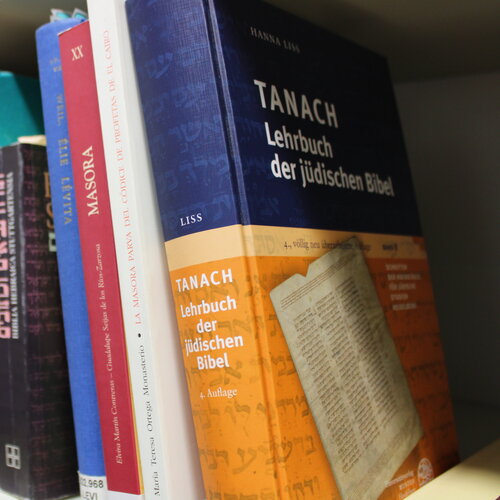
Bücher: Tanach, Liss

Main research areas

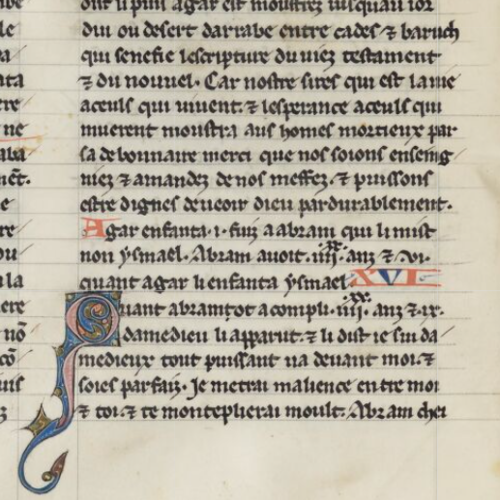
Only the so-called Masora from Eretz Israel, i.e. the Masoretic hypertext with vocalization, accentuation and the addition of various annotations, allows the ancient consonantal text (Qumran) to become a medieval Masoretic text. The aim of the research at the chair is the first study of the Western European (Ashkenazic) Masora tradition between the 11th and 15th centuries, which differs from the Oriental Masora philologically and in its external appearance as a masora figurata. It also deals with the process of inculturation of the masora and the Hebrew Bible text into the Christian environment (architecture; book art).

The Heidelberg Chair focuses in particular on the interpretative tradition of the medieval northern French school of exegetes, i.e. the exegetical commentaries of R. Shelomo Yitzchaqi (RaShY) and his school, R. Avraham Ibn Ezra, the members of the Qimchi family and R. Moshe ben Nachman ('RaMBaN = Nachmanides'). In addition, the surviving Hebrew-French Bible glossaries, especially from the 13th century, are also dealt with. These Bible glossaries, which reproduce the vernacular glosses in Hebrew graphics, are exceptional witnesses not only for exegetical and cultural-historical Judaic research, but also for morphological, phonological and lexical research into Old French between the 11th and 13th centuries. They form fundamental texts for research into the interrelations between Jewish intellectual history and the non-Jewish environment.

The biblical interpretation of the representatives of the so-called science of Judaism in Germany and Eastern Europe is being researched primarily with regard to its influence on modern Judaism and its understanding of religion and culture.

Courses

The courses are regularly linked back to the main areas of research.

The entire spectrum of the subject - from the biblical traditions to the latest interpretative literature - is covered and dealt with in teaching on the Bachelor's and Master's degree courses.

In cooperation with the Abraham Berliner Center , workshops and lectures are regularly held with international guest scholars.

Teaching

Winter semester 2025/2026

  • Advanced seminar / exercise: The temple: sacred place, fiction, utopia

Leader: Prof. Dr. Hanna Liss

Wednesday, 9.15-10.45 a.m., S 3

  • Proseminar / Exercise: Yaaqov and Esaw - hostile antagonists?

Leader: Prof. Dr. Hanna Liss

Wednesday, 11.15-12.45, S 3

  • Advanced seminar / exercise: The significance of the Masora in medieval Ashkenaz

Leader: Prof. Dr. Hanna Liss

Thursday, 09.15-10.45, S 3


Research projects at a glance

Masorah Rearranged: Eight Masoretic Lists in MS London Oriental 2091, fol. 335vcorpus masoreticum working papers 6 (2023).

Corpus Masoreticum

Paris Arsenal 5956

Bible Glossaries

Berlin_SPK_Fragment_zum_Hohelied_Public_Domain_1.0

Biblia Rabbinica


Events

No news available.

Past Events

Closing ranks between academic research and theologically oriented rabbinical training

News Special Dates Press Release

On Wednesday, February 18, 2026, a significant event for the Jewish educational landscape in Germany took place in the Senate Hall of the University of Potsdam. The Heidelberg University of Jewish Studies (HfJS) and the Potsdam-based Nathan Peter Levinson Foundation, which is responsible for liberal (Reform) and conservative (Masorti) rabbinical and cantorial education in Germany, signed a declaration of intent for closer cooperation in the future.

During the signing ceremony, Dr. Andreas Brämer, Rector of the HfJS, Dr. Dmitrij Belkin, Chairman of the Nathan Peter Levinson Foundation, and Dr. Josef Schuster, President of the Central Council of Jews in Germany, signed the agreement. The Central Council of Jews is both the sponsor of the HfJS and the founder of the Nathan Peter Levinson Foundation.

This cooperation marks an important step towards the establishment of a nationwide Jewish academic and rabbinical network. It is intended to expand the study and training opportunities for students in the areas of rabbinate, cantorate and theological and educational training and at the same time intensify the academic exchange between the two institutions.

Dr. Josef Schuster emphasized on the occasion of the signing:
"An anchor of Jewish education must be the ability and the will to network. The cooperation agreed today between the Hochschule für Jüdische Studien and the Levinson Foundation is a very significant step. By joining forces instead of parallel structures and through exchange on an equal footing, a model of cooperation to strengthen the Jewish community is being created."

Rector Dr. Andreas Brämer emphasized:
"This declaration of intent is a promise to the future: we are closing ranks between academic research and theologically oriented rabbinical education - united by the mission to strengthen Jewish life in Germany from within."

Dr. Dmitrij Belkin, Chairman of the Nathan Peter Levinson Foundation, also underlined the importance of the agreement:
"This cooperation builds an academic and religious bridge between Potsdam and Heidelberg - not a bridge that is taken for granted. It strengthens both locations and the Jewish community. And that counts."

Prof. Oliver Günther, President of the University of Potsdam, welcomed the new partnership in his welcoming address as an enrichment for Jewish education in Germany. The event concluded with a lecture by Rabbi Netanel Olhoeft (Abraham J. Heschel Seminar for Conservative Rabbinical Education) on the rabbinate of the future and a discussion with the signatories moderated by Dr. Anastassia Pletoukhina.
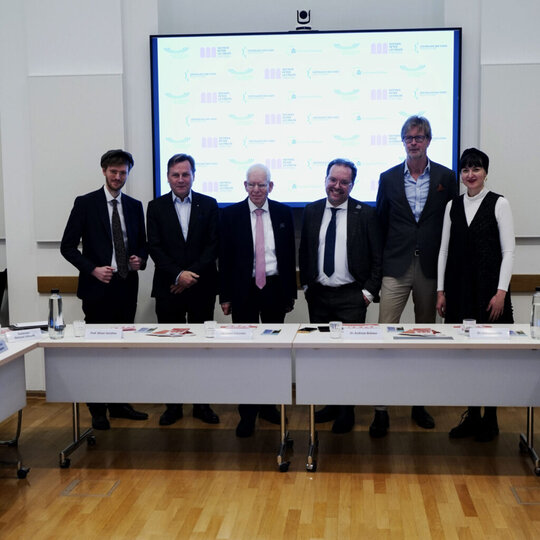
Absichtserklärungsunterzeichnung in Potsdam
  • Date: 19 February 2026
    Date 19 February 2026
  • Time: 
	07:40
	UTC+01:00
    Time 07:40 UTC+01:00
  • Participation:
    Participation
  • Language:
    Language
  • Contact:
    Contact
  • Location:
    Location
  • Registration? No

News


Get to know the ABC and become a member

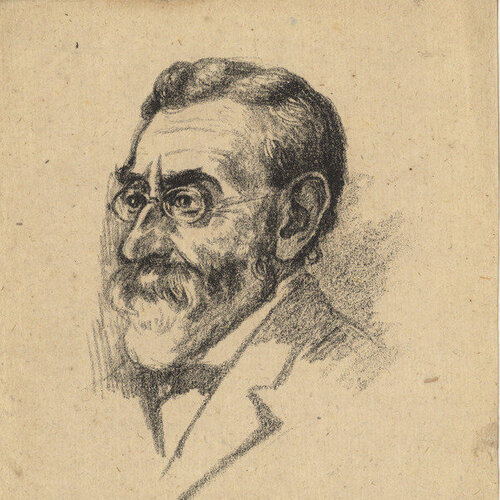
Portrait of Professor Abraham Berliner (1833-1914)

Newsletter cover Lehrstuhl Bibel