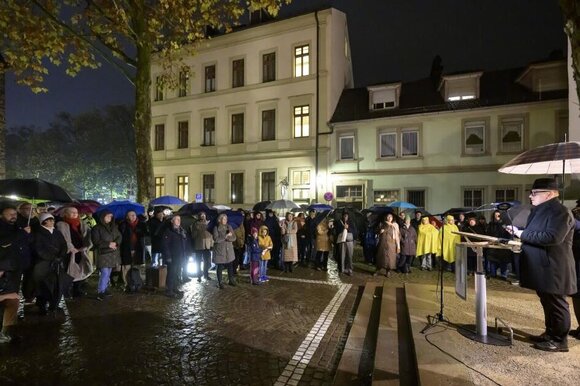
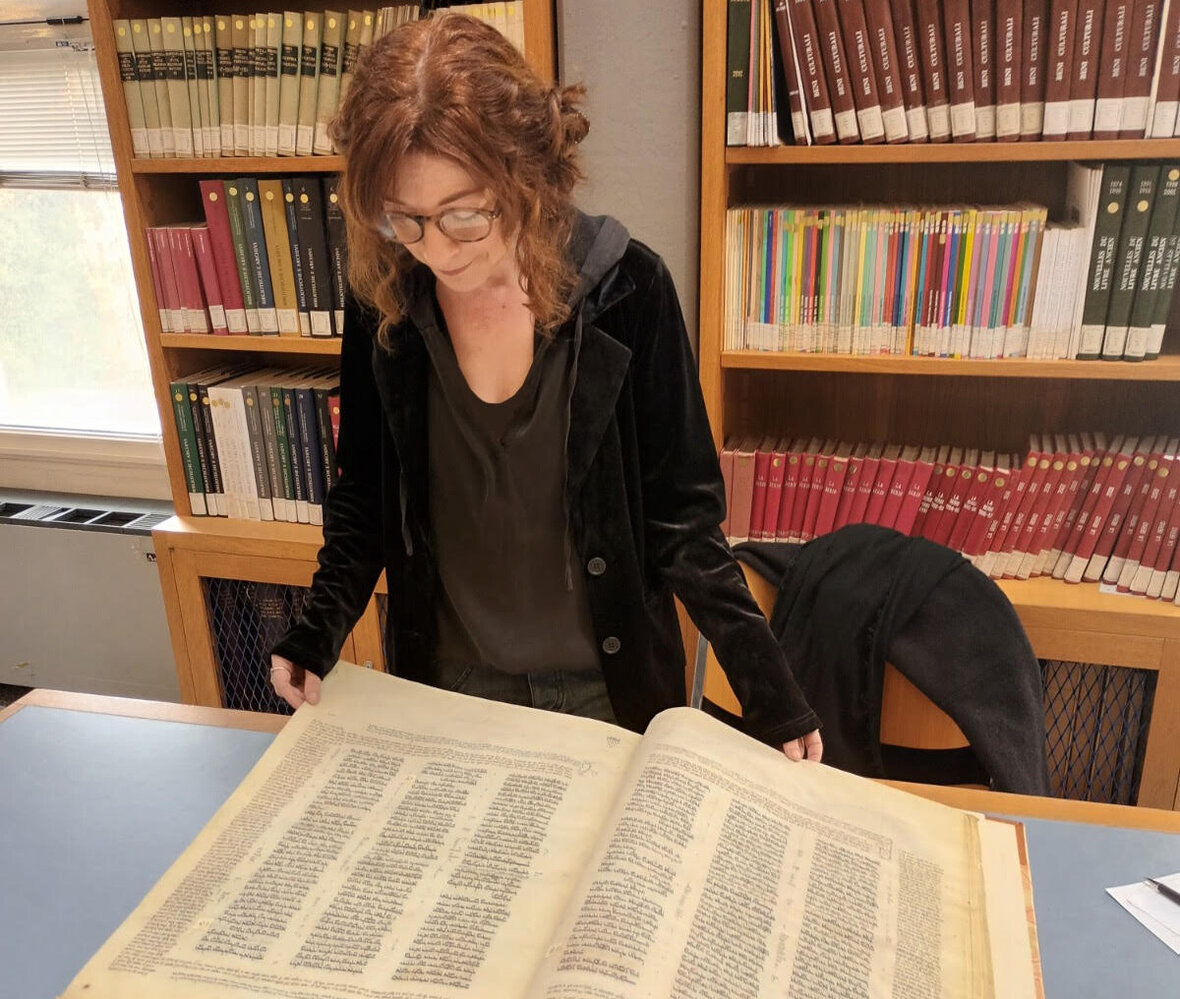
Sebastian Seemann am Arbeitsplatz. Foto © Ekaterina 'Qeto' Gotsiridze
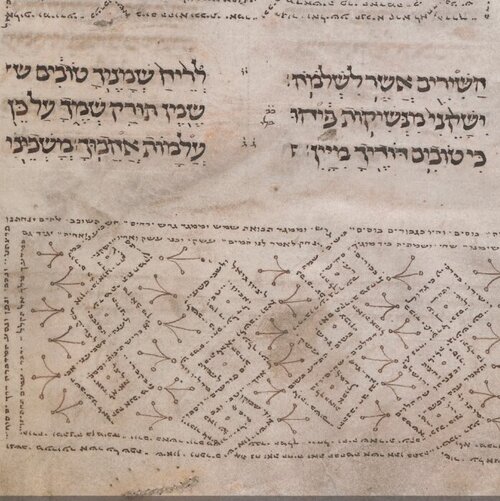
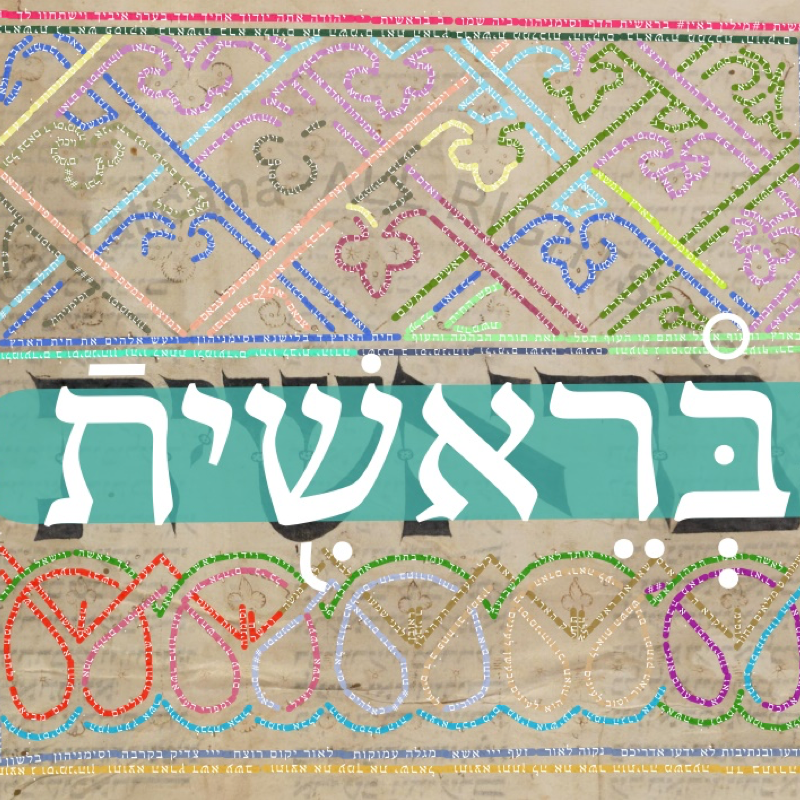
Star of David, RNL (B19a), fol. 474r (transcribed). Masorah Rearranged: Eight Masoretic Lists in MS London Oriental 2091, fol. 335v corpus masoreticum working papers 6 (2023).
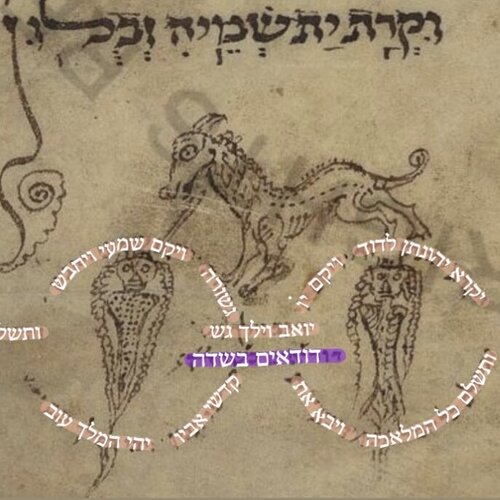
Fische, British.Library.Or.2091__251r
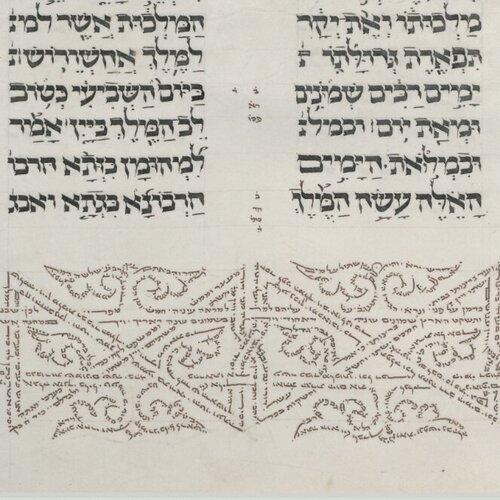
British.Library.Or.2091, 20r edit

Corpus Masoreticum. The Inculturation of Masora into Jewish Law and Lore from the 11th to the 14th Centuries. Digital Reconstruction of a Forgotten Intellectual Culture

Funded by the German Research Foundation

This project began in 2018 and is scheduled to run for 12 years. The aim is to conduct the first philological study of the Western European Masoretic tradition between the 11th and 14th centuries. In the first two funding phases, the richly decorated calligraphic Ashkenazic Bibles, the linear Masora and the micrographic Masora figurata illustrations in various manuscripts were examined philologically. The Masora figurata as well as significant parts of the linear Masora magna from nine medieval manuscripts have been transcribed and made available to the public in open access. So far, groundbreaking results have been achieved with regard to researching the philological quality of the Masora figurata as well as its exegetical and pedagogical function in various manuscripts.

As a digital project, Corpus Masoreticum is supported by a highly scalable digital cloud infrastructure that covers the entire workflow for the management of manuscript holdings, transcriptions, analyses and publications. Its centerpiece, the digital scholarly editing workspace BIMA 2.1, is based on three fundamental concepts: 1. IIIF-compatible manuscript repositories, 2. SVG-TextPath transcriptions, 3. a Neo4j graph database based on a loosely coupled text-as-a-graph data model. To date, BIMA 2. 1 hosts 112 manuscripts and displays over 7,000 (partially or fully transcribed) pages with almost 300,000 transcription lines, of which more than 500 pages have already been published under an Open Access Creative Commons CC-BY-SA 4.0 license:

Corpus Masoreticum & BIMA 2.1

The computational toolkits have been enhanced by the implementation of methods and algorithms such as machine text recognition (HTR) and correspondence analysis/seriation of lemma features.

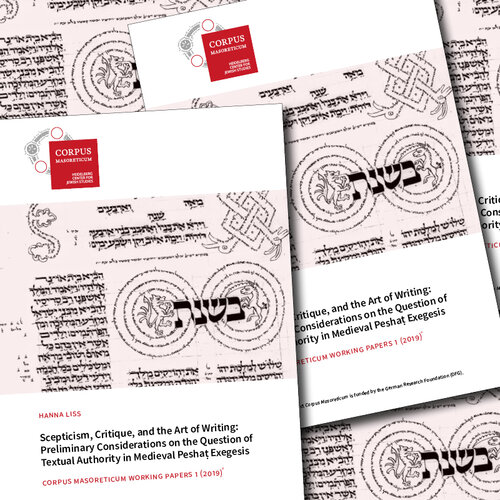
Corpus Masoreticum runs its own publication series: Corpus Masoreticum Working Papers


KNOWLEDGE TRANSFER ACTIVITIES AND OUTREACH:

Multimedia contributions for the Corpus Masoreticum

Dokumentationsvideos

Documentary videos, in which the aims and methods of the project as well as individual artifacts are presented, provide the interested non-specialist public with insights into the fascinating world of Jewish biblical interpretation, the masora figurata and the Hebrew book and knowledge culture of the Middle Ages.

"When Bible meets literature - Yaaqov's and Esaw's unknown pages", series "Madda ba-Bayit" 'Wissenschft zu Hause' of the Central Council of Jews in Germany: https://youtu.be/yOk0ZXdAxuE

Documentary videos from the various projects:
https://www.youtube.com/channel/UCalER-_CjwOedcaZrGBG0nQ
https://t1p.de/BIMA-Video1
https://t1p.de/BIMA-Video2

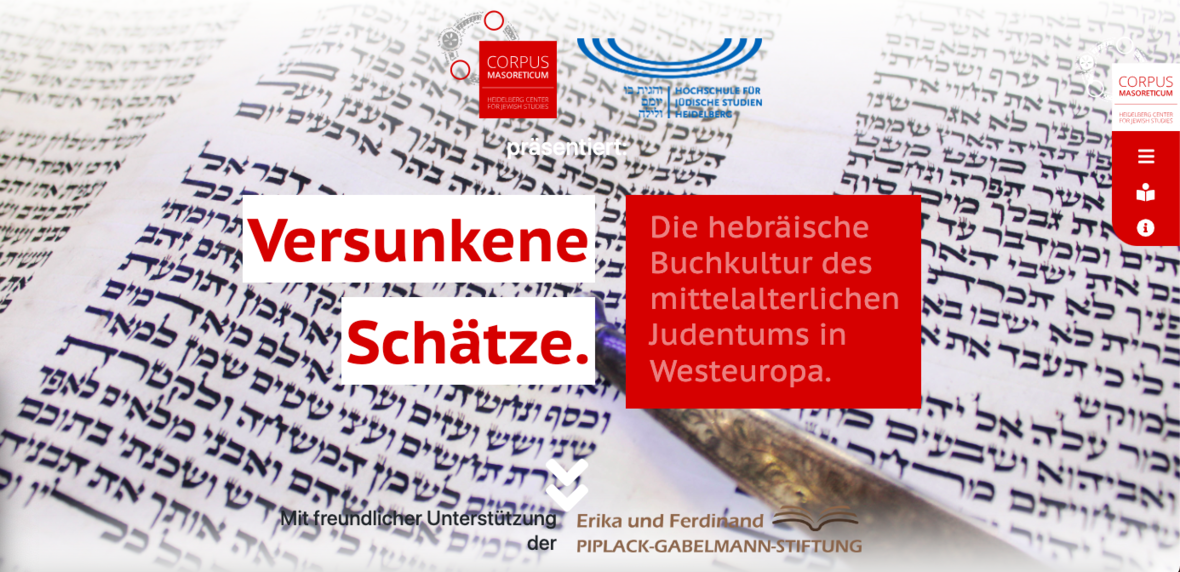
Multimedia online exhibition: "Versunkene Schätze: Die hebräische Buchkultur des mittelalterlichen Judentums in Westeuropa"

Visit the online exhibition

The Chair of "Bible and Jewish Biblical Interpretation" took the anniversary of "1700 years of Jewish life in Germany" as an opportunity to present the subject area of the material heritage of Ashkenazi Judaism to a wider public. In this context, an online exhibition was created to present Jewish scholarly culture in a multimedia format using Hebrew medieval manuscripts.

As a means of academic communication, the project has set itself the goal of not only addressing the painful history of Judaism in relation to ecclesiastical power, but also making the positive aspects of cultural and theological synergies visible: The exhibition artistically and aesthetically juxtaposes the antagonism of church and Judaism with the image of a culturally fruitful interdependence between the respective environmental cultures and the Jewish educational society, which has only begun to be recognized and appreciated so far.

Concept and text: Prof. Dr. Hanna Liss; web design, video & audio production: Clemens Liedtke, M.A.


Current events of the Corpus Masoreticum

No news available.

Past events

Connecting the past with the present

News Press Release

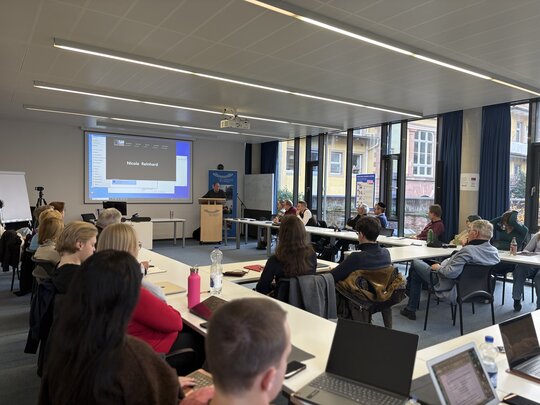
He was "almost electrified" when Mr. Kapustin announced himself, said Professor Heil at the beginning of last Tuesday's event. As part of Professor Heil's overview lecture "Jewish History of Antiquity - What Josephus Knew", Samuel Kapustin gave a lecture about his late father, the former Ladenburg rabbi Dr. Max Kapustin, among other things. Kapustin began by describing how his parents fled to the USA after their marriage in 1938 to Danville, Virginia, the birthplace of Samuel Kapustin and his now deceased brother Daniel. Ten years later, they decided to move to Detroit because of the large Jewish community. Max Kapustin worked there until his retirement as director of the Hillel Foundation at Wayne State University, as well as a professor in the Department of German and Middle Eastern Studies and held numerous positions in the Jewish community.

for 38 years, Samuel Kapustin taught and supervised Jewish history and Jewish philosophy at a Jewish high school in Toronto. He addressed many of the topics he was confronted with during this time in his lecture.

For example, he asked the question he was often asked about the purpose of teaching and learning history, especially in light of the growing presence of STEM subjects. Here he recalled a statement made by a family member who first asked Kapustin about his profession and then remarked that the latter did not have much value. According to Kapustin, his relative was unfortunately not alone in this opinion.

History, according to North American curricula, reveals where we come from and who we are. It teaches us the important skill of connecting the past to the present, and most importantly, it strengthens our identity and fosters empathy. Although these goals are important, Kapustin emphasized that they must also be present in the minds of teachers and students. History lessons today are often taught without a conscious goal. History and its teaching, he continued, have been used time and again to destabilize democracy. While we are certainly familiar with this phenomenon from regimes of the past, this deliberate misrepresentation of historical events is now also occurring in democracies that were considered "immune to such incidents of historical abuse".

Kapustin advocated an educational approach in which the classroom should be an environment full of challenges, such as critical thinking, thoughtful evaluation and the exchange of opposing views, which students should reject but not "ignore or dismiss". The focus of historical research is not just the facts and events themselves, but rather the reasons behind them. In addition, historical thinking differs from the natural sciences in that the former often requires an emotional connotation of past events to be explored. All these aspects together make the study of history very complex. He concluded by noting that the past cannot speak meaningfully to the present if we are not prepared to meet it at eye level and that it was topics such as these that were close to his father's heart and which he dealt with throughout his career.


In a subsequent interview, Kapustin went into more detail about some aspects of his lecture. He had previously mentioned that two fundamental principles had prevailed in his parents' home that are not found in this form in many other families, especially not in this day and age: learning for learning's sake and being involved in the Jewish community. These principles served as a role model for him and determined, initially subconsciously, what he would focus on later. In particular, they also reflected his later approach of considering and teaching Jewish studies and general studies together.

Kapustin gained his personal motivation to teach primarily through two teachers, as one familiarized him with topics of world history and he learned to particularly appreciate the use of primary sources in the second teacher's lessons. With regard to the instrumentalization of the teaching of history mentioned in the lecture, he remarked that history was almost doomed to be misinterpreted for ideological and political purposes. He emphasized a certain responsibility on the part of the students to recognize this.

He also emphasized his father's principle of reaching out to people from diverse religious backgrounds and professions as extraordinary, as this resulted in a kaleidoscope of people from different backgrounds and ideologies coming in and out of his parents' home in a steady stream.

Although he does not see himself as a kind of "spokesperson" for his deceased father, he always carries his approach with him in spirit.

(Editor: Annalena Bauer)
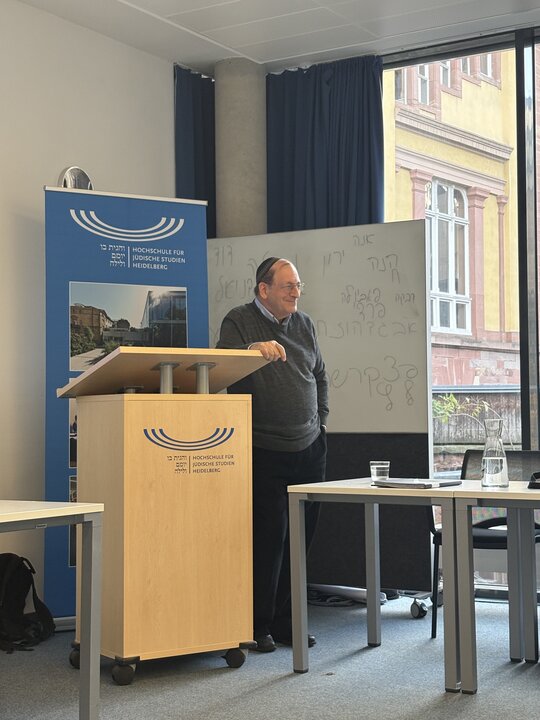
Samuel Kapustin Samuel Kapustin 2
  • Date: 20 November 2025
    Date 20 November 2025
  • Time: 
	12:31
	UTC+01:00
    Time 12:31 UTC+01:00
  • Participation:
    Participation
  • Language:
    Language
  • Contact:
    Contact
  • Location:
    Location
  • Registration? No

News


Publications

Masorah Rearranged: Eight Masoretic Lists in MS London Oriental 2091, fol. 335v.

Hanna Liss

Read the article

Gentile Wisdom Side-by-Side with Rashi: An Example of a Masora Figurata that Conveys Much More than Masoretic Knowledge.

Bettina Burghardt

Read the article

Multi-Handed Bible Manuscripts: Masoretic Workshops in Medieval Ashkenaz?*

Ilona Steimann

Read the article

publications corpus masoreticum

Corpus Masoreticum

Further Publications


Contact

Logo Corpus Masoreticum

Corpus Masoreticum

Show Contacts