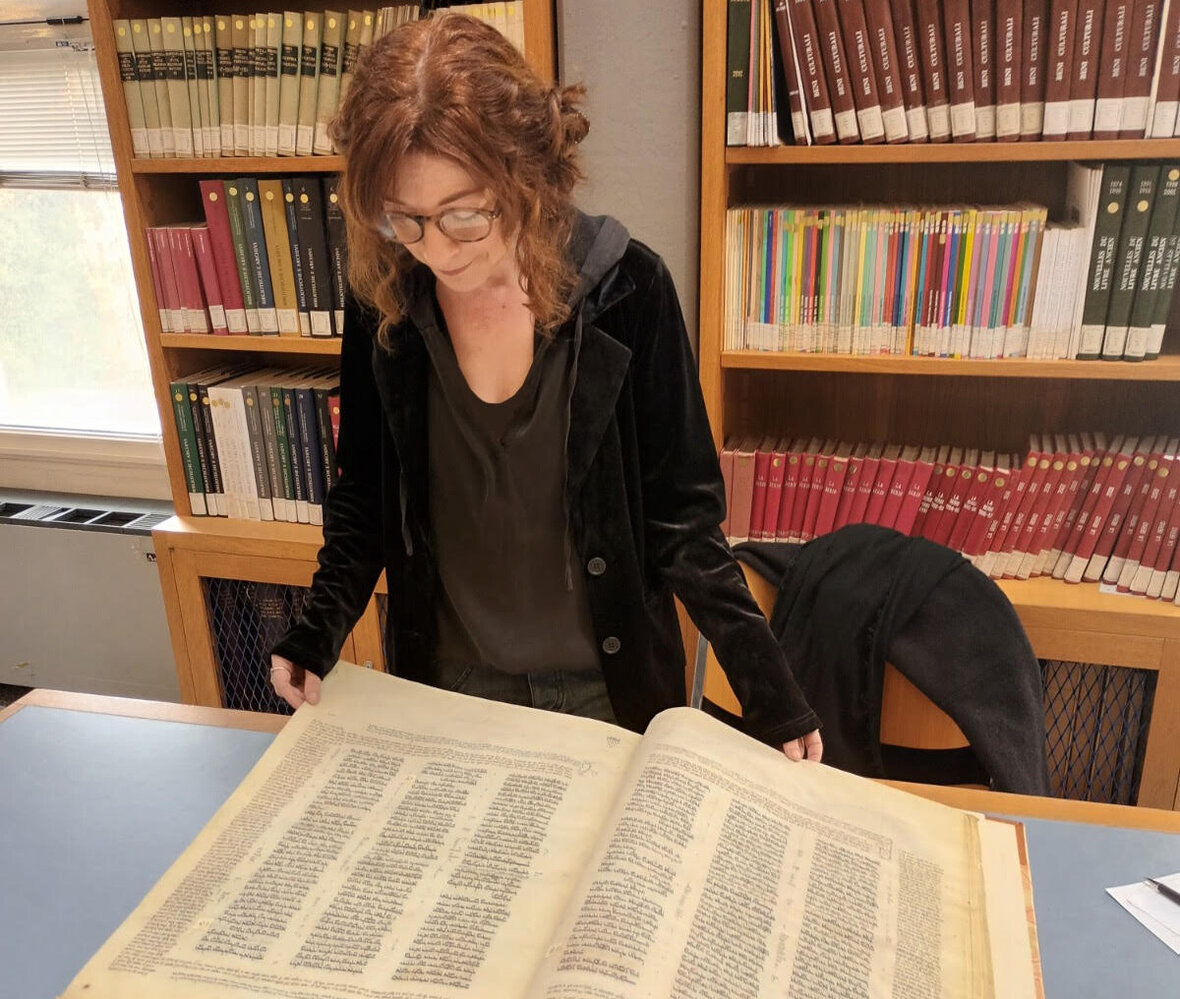
Sebastian Seemann am Arbeitsplatz. Foto © Ekaterina 'Qeto' Gotsiridze
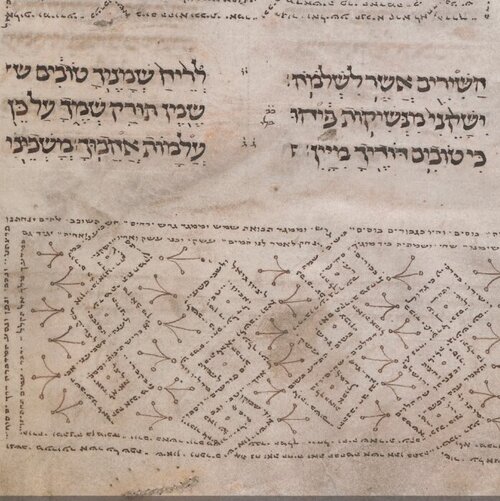
Star of David, RNL (B19a), fol. 474r (transcribed). Masorah Rearranged: Eight Masoretic Lists in MS London Oriental 2091, fol. 335v corpus masoreticum working papers 6 (2023).
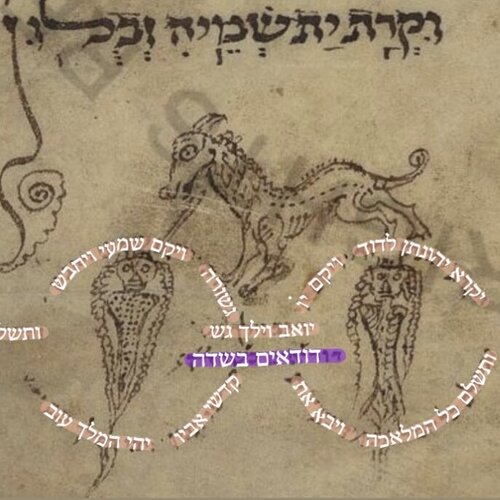
Fische, British.Library.Or.2091__251r
British.Library.Or.2091, 20r edit

Corpus Masoreticum. The Inculturation of Masora into Jewish Law and Lore from the 11th to the 14th Centuries. Digital Reconstruction of a Forgotten Intellectual Culture

Funded by the German Research Foundation

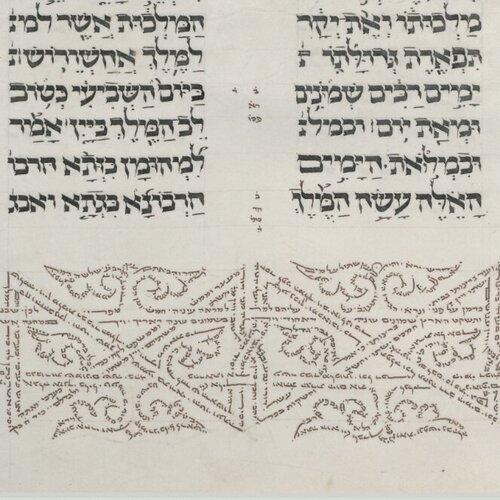
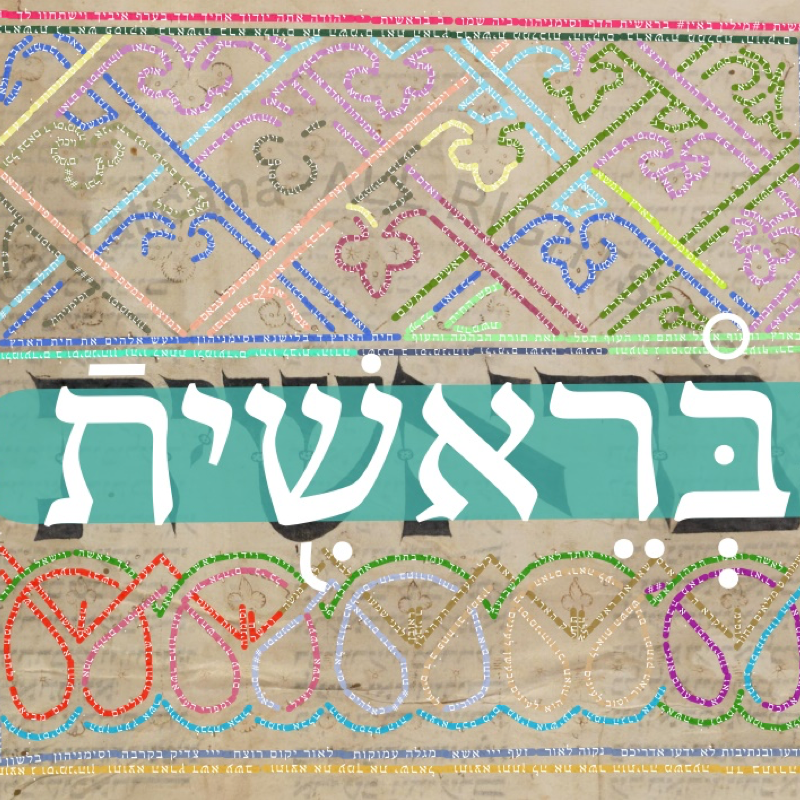
This project began in 2018 and is scheduled to run for 12 years. The aim is to conduct the first philological study of the Western European Masoretic tradition between the 11th and 14th centuries. In the first two funding phases, the richly decorated calligraphic Ashkenazic Bibles, the linear Masora and the micrographic Masora figurata illustrations in various manuscripts were examined philologically. The Masora figurata as well as significant parts of the linear Masora magna from nine medieval manuscripts have been transcribed and made available to the public in open access. So far, groundbreaking results have been achieved with regard to researching the philological quality of the Masora figurata as well as its exegetical and pedagogical function in various manuscripts.

As a digital project, Corpus Masoreticum is supported by a highly scalable digital cloud infrastructure that covers the entire workflow for the management of manuscript holdings, transcriptions, analyses and publications. Its centerpiece, the digital scholarly editing workspace BIMA 2.1, is based on three fundamental concepts: 1. IIIF-compatible manuscript repositories, 2. SVG-TextPath transcriptions, 3. a Neo4j graph database based on a loosely coupled text-as-a-graph data model. To date, BIMA 2. 1 hosts 112 manuscripts and displays over 7,000 (partially or fully transcribed) pages with almost 300,000 transcription lines, of which more than 500 pages have already been published under an Open Access Creative Commons CC-BY-SA 4.0 license:

Corpus Masoreticum & BIMA 2.1

The computational toolkits have been enhanced by the implementation of methods and algorithms such as machine text recognition (HTR) and correspondence analysis/seriation of lemma features.

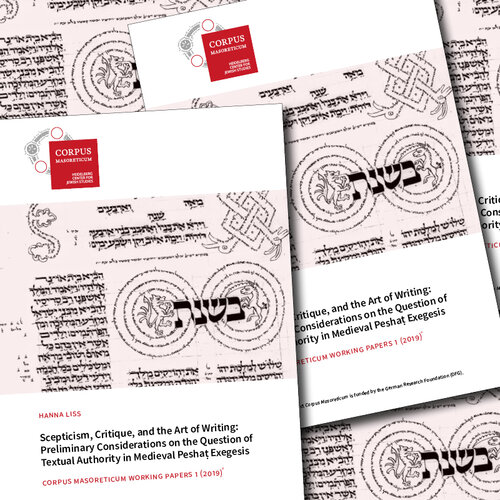
Corpus Masoreticum runs its own publication series: Corpus Masoreticum Working Papers


KNOWLEDGE TRANSFER ACTIVITIES AND OUTREACH:

Multimedia contributions for the Corpus Masoreticum

Dokumentationsvideos

Documentary videos, in which the aims and methods of the project as well as individual artifacts are presented, provide the interested non-specialist public with insights into the fascinating world of Jewish biblical interpretation, the masora figurata and the Hebrew book and knowledge culture of the Middle Ages.

"When Bible meets literature - Yaaqov's and Esaw's unknown pages", series "Madda ba-Bayit" 'Wissenschft zu Hause' of the Central Council of Jews in Germany: https://youtu.be/yOk0ZXdAxuE

Documentary videos from the various projects:
https://www.youtube.com/channel/UCalER-_CjwOedcaZrGBG0nQ
https://t1p.de/BIMA-Video1
https://t1p.de/BIMA-Video2

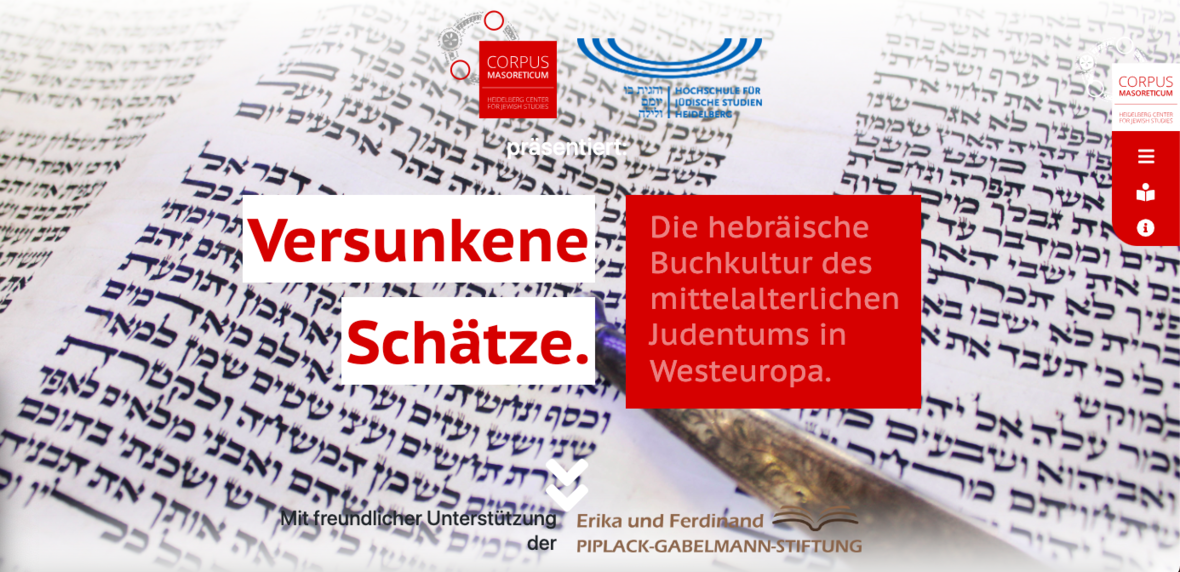
Multimedia online exhibition: "Versunkene Schätze: Die hebräische Buchkultur des mittelalterlichen Judentums in Westeuropa"

Visit the online exhibition

The Chair of "Bible and Jewish Biblical Interpretation" took the anniversary of "1700 years of Jewish life in Germany" as an opportunity to present the subject area of the material heritage of Ashkenazi Judaism to a wider public. In this context, an online exhibition was created to present Jewish scholarly culture in a multimedia format using Hebrew medieval manuscripts.

As a means of academic communication, the project has set itself the goal of not only addressing the painful history of Judaism in relation to ecclesiastical power, but also making the positive aspects of cultural and theological synergies visible: The exhibition artistically and aesthetically juxtaposes the antagonism of church and Judaism with the image of a culturally fruitful interdependence between the respective environmental cultures and the Jewish educational society, which has only begun to be recognized and appreciated so far.

Concept and text: Prof. Dr. Hanna Liss; web design, video & audio production: Clemens Liedtke, M.A.


Current events of the Corpus Masoreticum

No news available.

Past events

Second restitution to the rabbinical seminary in Budapest

News Press

On November 12, 2025, Philipp Zschommler visited the Országos Rabbiképző - Zsidó Egyetem (OR-ZSE) in Budapest. During this visit, he presented the university library with further books that had been looted from the library of the rabbinical seminary by the National Socialists in 1944. Library director Tamási Balázs accepted the volumes

Background to the research

For many years, Philipp Zschommler has been researching the origin and provenance of books that were confiscated from Jewish private individuals and institutions during the Nazi era. On this basis, it has already been possible to identify volumes in the university library that originated from the library of the Budapest Rabbinical Seminary.

earlier returns

Several rare prints from the 16th century had already been recognized as looted property and returned to the OR-ZSE. The ceremonial restitution of these four Hebrew book rarities took place on April 26, 2023.

the three volumes now returned

The three volumes now returned to Budapest are specialized works from various fields of Jewish studies published in the 19th century. They were printed in Paris, Munich and Izmir and reflect different regional and scientific traditions of Jewish scholarship.

1. Version arabe d'Isaïe de R. Saadia ben Josef al-Fayyûmî
This volume contains the Arabic translation of Isaiah by Saadiah Gaon with Hebrew annotations and a French translation, compiled by Joseph and Hartwig Derenbourg. The third volume of this classic edition of French Oriental studies was published in 1896 by Ernest Leroux in Paris; in the foreword, Hartwig Derenbourg thanks Rabbi and Orientalist Vilmos Bacher, the former rector of the Rabbinical Seminary, for his support.

2. Raphael Rabbinovicz: Variae Lectiones in Mischnam et in Talmud Babylonicum (Berakhot)
This work was published in 1867 in Munich by the royal printing house H. Rösl. It is part of a monumental multi-volume project that collects and scientifically annotates text variants of the manuscripts and early prints of the Babylonian Talmud and is one of the fundamental sources of Talmudic textual criticism and manuscript research.

3. Rabbi Eliyahu Hacohen ha-Itamari: Sefer Ene ha-Edah
The author, a rabbi in Izmir (1640-1729), was a staunch opponent of the false messiah Sabbatai Zvi. The work was first published in Izmir in 1863 and contains drashot on Bereshit, Shemot and the Book of Esther.

(original source)

2. Restitution nach Budapest, Zschommler und Balázs
  • Date: 16 December 2025
    Date 16 December 2025
  • Time: 
	13:22
	UTC+01:00
    Time 13:22 UTC+01:00
  • Participation:
    Participation
  • Language:
    Language
  • Contact:
    Contact
  • Location:
    Location
  • Registration? No

News


Publications

Masorah Rearranged: Eight Masoretic Lists in MS London Oriental 2091, fol. 335v.

Hanna Liss

Read the article

Gentile Wisdom Side-by-Side with Rashi: An Example of a Masora Figurata that Conveys Much More than Masoretic Knowledge.

Bettina Burghardt

Read the article

Multi-Handed Bible Manuscripts: Masoretic Workshops in Medieval Ashkenaz?*

Ilona Steimann

Read the article

publications corpus masoreticum

Corpus Masoreticum

Further Publications


Contact

Logo Corpus Masoreticum

Corpus Masoreticum

Show Contacts